
🎖️ Canada’s Fighter Jet Dilemma: F-35 vs. Gripen — What’s Really Happening? 🇨🇦✈️
- Ian Miller

- Feb 15
- 3 min read
Canada’s long-running effort to replace its aging CF-18 fighter jets has re-ignited an old debate — and sparked new headlines suggesting the United States is warning Ottawa over a potential deal for Sweden’s Gripen. The reality, as ever in defence politics, is more nuanced than the viral framing.

In January 2023, the Government of Canada finalized a deal to purchase 88 F-35 Lightning II stealth fighters from U.S. defence giant Lockheed Martin. The agreement marked the end of more than a decade of political wrangling over how to replace the Royal Canadian Air Force’s Cold War-era CF-18 Hornets. The F-35 — a fifth-generation stealth aircraft used by numerous NATO allies — was selected after a formal competition that also included Boeing’s Super Hornet and Sweden’s Gripen.
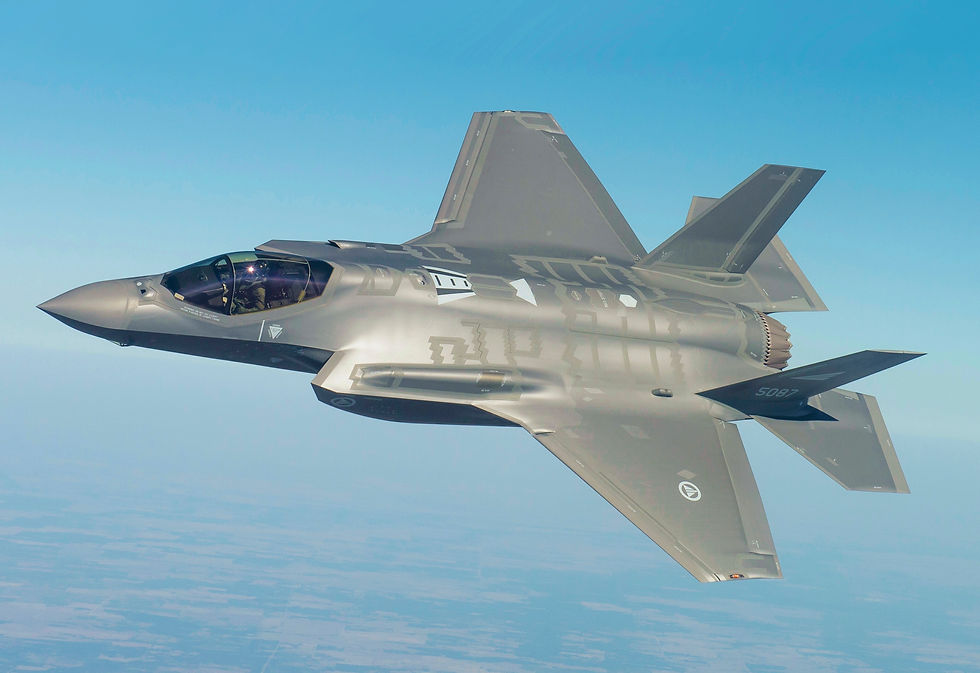
While the contract covers 88 aircraft, funding has initially been committed for the first tranche, with the remaining jets tied to long-term budget allocations. That detail matters because in recent months, Ottawa has signaled it is reviewing aspects of the procurement amid rising costs and shifting strategic priorities. Enter Sweden again.
Defence manufacturer Saab AB has renewed its pitch for the Saab JAS 39 Gripen E, offering industrial partnerships, domestic production elements, and a proposal that includes GlobalEye airborne early warning aircraft. Saab argues that its package could generate substantial Canadian jobs and sovereign industrial benefits, a factor that has long influenced procurement politics in Ottawa.
The renewed discussion has not gone unnoticed in Washington.
Public comments from the U.S. ambassador to Canada and other officials have emphasized that any significant reduction in Canada’s F-35 fleet could affect the structure and operations of NORAD, the binational aerospace defence partnership between Canada and the United States. NORAD relies heavily on integrated systems, shared data links, and interoperability — areas where the F-35 is deeply embedded within U.S. and allied airpower doctrine.
Those remarks have been interpreted in some online commentary as a blunt Pentagon warning against a Gripen purchase. However, there has been no formal Pentagon ultimatum or public declaration that Canada is prohibited from buying Swedish aircraft. Rather, U.S. officials have framed their position around operational consequences: if Canada fields a significantly different capability than originally planned, continental defence planning and burden-sharing arrangements might need adjustment.
In practical terms, the F-35 is designed as a networked stealth platform that shares real-time data across allied forces, including U.S. Air Force and Navy units. It is already operated by multiple NATO countries, making interoperability relatively seamless. The Gripen E, while a highly capable 4.5-generation multirole fighter with advanced avionics and electronic warfare systems, is not integrated into the same U.S. stealth ecosystem. Choosing it — especially in place of the bulk of the F-35 fleet — could require adjustments in how Canada fulfills its NORAD commitments.
From Ottawa’s perspective, the debate is not simply about aircraft specifications. It involves cost control, industrial offsets, sovereignty in maintenance and upgrades, and long-term strategic flexibility. Saab has emphasized technology transfer and domestic production as key advantages. Lockheed Martin’s offer, meanwhile, aligns Canada closely with the United States and other F-35 partner nations in training, sustainment, and operational doctrine.
For Washington, the issue is less about punishing Canada and more about maintaining cohesion in continental defence. NORAD’s mission — detecting, deterring, and defending against aerospace threats to North America — depends on deeply integrated command-and-control systems. A divergence in fleet capability does not make cooperation impossible, but it could complicate planning and require rebalancing of responsibilities.
So is it true that the Pentagon has warned Canada over a Gripen deal? In a narrow sense, U.S. officials have indeed cautioned that scaling back the F-35 purchase could affect defence arrangements. In a broader sense, the idea of a dramatic “stop the Gripen or else” threat overstates what has been publicly said. What exists is strategic signaling — not an explicit veto.
Canada has not canceled its F-35 purchase. The first aircraft remain on track for delivery, and the overall program continues. What is under review is the scale, timing, and possible composition of the broader fleet. Whether Ottawa ultimately sticks with all 88 F-35s, supplements them, or revisits alternatives like the Gripen, the decision will ripple beyond aircraft hangars — shaping North American defence policy for decades to come.
For now, the story is less about confrontation and more about negotiation: allies balancing sovereignty, interoperability, economics, and security in a rapidly shifting geopolitical landscape.


Comments