
He did not set out to be seen. Ian Kydd Miller a short Biography.

Ian Kydd Miller’s photographs move quietly through the world, much like the man himself. Born in Cheshire, England, he came of age photographically in a period when cameras were still largely mechanical, when each frame cost something—time, money, attention—and when the act of pressing the shutter carried a weight that digital abundance has, in many cases, dissolved.
His early years with a camera were not shaped by speed or volume, but by hesitation, by the discipline of choosing when not to shoot. That instinct, learned long before it had a name, would become the foundation of everything that followed.
He did not arrive at photography through spectacle. There is no origin story of dramatic revelation, no single image that changed the course of his life. Instead, there is the slower, less romantic truth: a gradual accumulation of looking. A habit formed over years. A way of being in the world that placed observation above intervention. By the time he left the United Kingdom and eventually settled in Cambodia in the late 2000s, he had already built a private language with the camera—one that did not depend on recognition and did not seek it.
Phnom Penh offered something that aligned with his temperament. Not opportunity in the commercial sense, nor even the pull of “story” in the editorial sense, but a density of everyday life that did not need to be heightened to be meaningful. The city moves in layers: motorbikes threading through traffic, vendors setting up and packing down, labour unfolding in repetitive gestures, conversations beginning and dissolving in the heat. It is a place where the extraordinary rarely announces itself, because the ordinary is already full.
Miller did not arrive to extract images from that environment. He stayed long enough for the environment to absorb him.
There is a lineage to this kind of work, though Miller rarely situates himself within it. The patience recalls Henri Cartier-Bresson, but without the insistence on formal resolution. Where Cartier-Bresson pursued the decisive moment—the instant in which geometry and meaning cohere—Miller is content to let the frame remain slightly unresolved, open at the edges. His photographs do not close around a subject; they allow space for ambiguity, for continuation. They feel less like conclusions and more like fragments of something ongoing.
A closer affinity might be found with Gordon Parks, particularly in the question of intent. Parks understood that photographing another human being is never a neutral act. It carries the risk of reduction, of turning a life into a symbol, of simplifying complexity into something consumable. Miller works with a similar awareness. His images resist that flattening. The people within them are not arranged for the camera, nor are they made to perform. They remain themselves—sometimes aware, often not, but never entirely claimed by the frame.
If there is a third point in this loose constellation, it is Josef Koudelka—not in visual style, but in method. Koudelka’s work is built on long-term immersion, on the accumulation of images over time rather than the pursuit of singular, definitive photographs. Miller’s archive operates in much the same way. It is extensive, even sprawling, but not curated for impact.
Tens of thousands of images, many of them quiet, some of them imperfect, all of them part of a larger act of attention. Taken together, they form not a portfolio in the conventional sense, but a record of sustained looking.
Technically, his approach is almost deliberately understated. Older full-frame DSLR bodies—tools that many have moved beyond—remain central to his practice. Cameras such as the
Nikon D700, D800 and D810 or its successors offer a rendering that suits his sensibility: a broad tonal range, a natural relationship to light, and just enough limitation to prevent the kind of excess that newer systems encourage. The autofocus is not infallible. The frame rate is not relentless. The camera asks something of the photographer, and he answers by slowing down.
Lens choice is equally considered. A preference for primes—particularly in the 50mm to 85mm range—creates a working distance that is neither intrusive nor detached. At 85mm, there is space. The photographer does not need to step into the subject’s immediate physical world to make an image. This distance is not avoidance; it is a form of respect. It allows the subject to remain within their own context, rather than being pulled out of it.

The visual effect of this choice is subtle but important. Backgrounds compress, but do not disappear. Depth of field narrows, but not to the point of isolation. The environment continues to speak. A man is not just a face; he is also the space he occupies, the work he performs, the light that falls across him.
Light, in Miller’s work, is never imposed. There is no attempt to create drama where it does not exist. Midday sun, often dismissed as too harsh, is accepted for what it is. Flat shade is not avoided. Blue hour is not romanticised. The light describes the world as it is encountered, not as it might be improved. This refusal to stylise is central to the feeling of the images. They do not ask to be admired; they ask to be recognised.
Editing follows the same philosophy. Cropping is minimal. Frames are allowed to retain their original structure, even when that structure includes elements that a more interventionist approach might remove. Imperfection is tolerated, sometimes even preferred, if it carries a sense of truth. A photograph that feels right is chosen over one that is technically superior but emotionally empty.

This approach extends to what is excluded. Miller does not chase spectacle. There is little interest in the dramatic, the shocking, the overtly symbolic. Instead, he returns, again and again, to repetition. Work. Waiting. Movement without destination. The kinds of moments that rarely demand to be photographed, and are therefore often ignored. In his hands, they become the substance of the work.
The result is a body of images that resists quick consumption. There is no immediate payoff, no single frame that declares itself as definitive. Meaning accumulates slowly, across images, across time. A viewer is not struck so much as drawn in, gradually, almost without noticing.

“My photography is very personal to me,” he has said, in various forms, over the years. “I do not care if nobody admires or desires it.” It is a statement that can be misread as indifference, but it is closer to a kind of discipline. To remove the need for admiration is to remove a powerful distortion. Without that pressure, the photographer is left with a more difficult question: not whether the image will be liked, but whether it is honest.
This position comes at a cost. The work does not travel easily. It does not conform to the expectations of a market that often rewards clarity, impact, and immediacy. Recognition is limited. Visibility is inconsistent. But what is gained is something less tangible and, perhaps, more durable: a consistency of voice, a body of work that does not shift with trends, and an archive that remains coherent over time.
There is also a kind of freedom in this approach. Without the need to impress, there is no incentive to exaggerate. Without the need to be seen, there is no urgency to produce. The work can unfold at its own pace, guided by attention rather than ambition.
In practical terms, this means long periods of quiet. Walking. Watching. Not shooting. It means accepting that many days will yield nothing of note. It means trusting that the act of looking is, in itself, a form of work, even when it does not result in an image.
It also means accepting that the value of the work may not be immediately apparent, even to the photographer. Images made today may only reveal their significance years later, when seen in relation to others. The archive becomes a kind of memory, not just of places and people, but of the photographer’s own way of seeing over time.
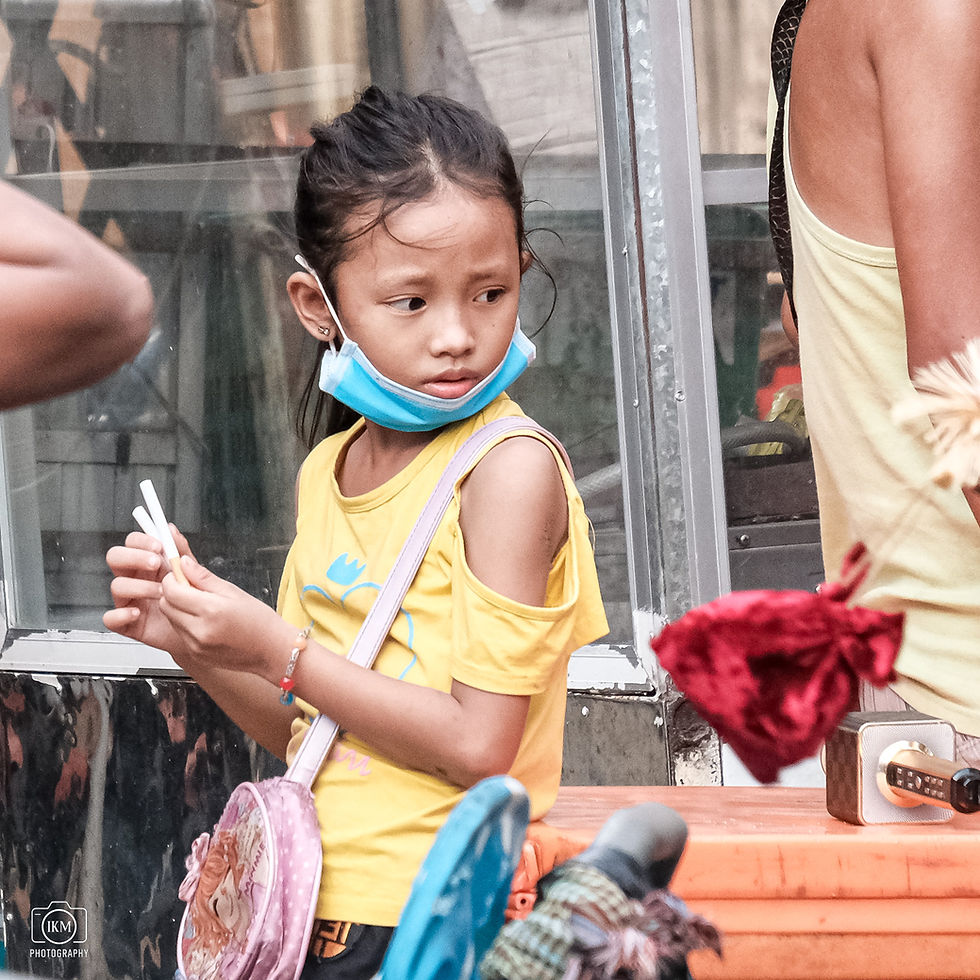
If there is a unifying thread through all of this, it is attention. Not the distracted attention of constant looking, but a deeper, more deliberate form. The kind that notices small shifts, subtle gestures, the way light changes across a face in the space of a few seconds. The kind that is willing to stay with a scene long enough for something to emerge, rather than moving on in search of something more immediately striking.
In an era defined by visibility—by the constant production and consumption of images—this approach reads as almost oppositional. It resists speed. It resists volume. It resists the idea that photography must justify itself through audience response.
If nobody ever saw the photographs, one suspects, Miller would still make them.
Not out of habit, and not out of obligation, but because the act itself—the act of seeing, of recognising, of holding onto something that might otherwise pass unnoticed—remains necessary.
And that, more than anything else, is where the work lives.


Comments