
Is Trump serious about seeking a ceasefire with Iran or plating his usual stupid games.

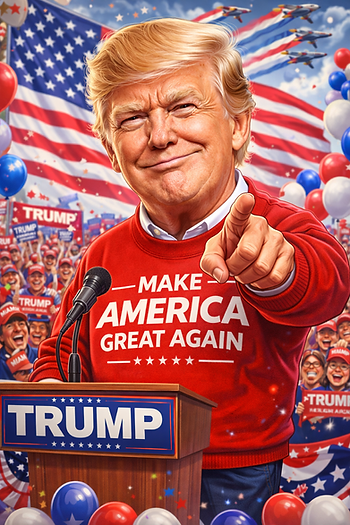
The language of peace, when it comes, arrives dressed for television.
On some mornings, Donald Trump speaks of endings. Wars, he says, should stop. Quickly. Cleanly. Preferably with signatures and cameras and a line that sounds good when replayed later. On other mornings—or sometimes the same one—there is the harder language: consequences, force, words like “hell” delivered with a casualness that suggests not inevitability, but readiness.
It is tempting to treat these as contradictions. They are not. They are the same sentence, split in half.
The current posture toward Iran is less a plan than a rhythm: offer a door, then stand beside it with a hammer. Diplomacy is extended, but always underlined by the possibility that it may be withdrawn, or overwhelmed, or simply made irrelevant by events already in motion. The message is not subtle. It does not intend to be.
There is a theory behind this—older than the man delivering it, though he performs it with particular enthusiasm. Pressure creates clarity. Escalation sharpens decisions. If the other side believes the cost of refusing is higher than the cost of agreeing, agreement will follow. Peace, in this telling, is not negotiated into existence; it is cornered.

But theories have a way of becoming atmospheres. And atmospheres are harder to control.
From Washington, D.C., the approach can look decisive. Options are kept open. Strength is visible. There is movement—always movement. But from the other end, from Tehran, the same choreography reads differently. Offers paired with threats do not feel like compromise; they feel like ultimatums with better lighting. What is presented as flexibility can register as inevitability. And inevitability has a way of inviting resistance rather than agreement.
The difficulty, then, is not simply whether the pursuit of peace is sincere. Sincerity is almost beside the point. The question is whether the method allows for an outcome other than the one it already prefers.
Trump’s version of peace has conditions. It asks for concessions that reshape the balance of power, not just the cessation of violence. It assumes that pressure will compress the timeline, that the threat of more will produce less. And sometimes, historically, that has been true. Sometimes.
But there is another pattern, quieter, less convenient. Pressure can also harden positions. It can turn negotiation into performance, each side speaking not to the other but to its own audience, unwilling to be seen bending first. In that environment, even genuine off-ramps begin to look like traps.
What makes this moment feel unstable is not the presence of strategy, but its elasticity. The tone shifts. The goals appear to expand and contract. One day, the objective is resolution. Another, it seems closer to submission. The language moves faster than the structure behind it.
And so you get this peculiar duality: a man talking about ending a war while simultaneously arranging the conditions under which it might intensify.
It is not a game, exactly. Games imply rules, boundaries, a shared understanding of what is being played. This is something looser, more improvisational. A negotiation conducted in public, where pressure is both tool and message, and where the line between diplomacy and spectacle is not clearly marked.
Peace may still be the goal. But it is a peace defined narrowly, pursued aggressively, and offered on terms that may be difficult for the other side to accept without losing something more than territory or leverage—something like face, or narrative, or the ability to say, later, that they chose the ending rather than had it chosen for them.
And that, in conflicts like this, is often the detail that decides whether wars actually end—or simply pause long enough to change shape.
There is a familiar rhythm to wars that neither side is quite ready to end. One party begins to speak in the language of completion—objectives nearly met, pressure working, the end in sight—while the other retreats into the language of defiance, delay, and conditionality.

Between those two positions sits the reality: a conflict still very much alive.
The latest signals from Tehran and Washington follow that pattern with uncomfortable precision. The United States insists its goals are almost achieved. Iran, through its foreign minister Abbas Araqchi, says there is no intention of negotiating “for now.” Neither statement is quite what it seems. Both are attempts to shape the next phase of the war rather than conclude it.
Washington’s claim that it is close to success is less a declaration of victory than a positioning move. It seeks to define the terms of any eventual settlement in advance: that pressure worked, that escalation was justified, that the outcome validates the strategy. But wars rarely end at the moment one side declares its aims fulfilled. They end when the other side agrees—or is forced—to accept that framing. Iran is not there.
Tehran’s refusal to negotiate should not be mistaken for irrational obstinacy. It is, in part, strategic patience. To enter talks now, under active pressure and with the United States claiming momentum, would be to accept a weaker hand at the table. By delaying, Iran signals both resilience and a refusal to legitimise the narrative of imminent American success. It is also a reminder that coercion has limits: pressure can bring parties to the brink of negotiation, but it does not guarantee they will step across it.
What emerges, then, is not a diplomatic opening but a narrowing corridor. Each side is speaking past the other, addressing different audiences. In Washington, the message is control: the situation is contained, the objectives are clear, the end is manageable. In Tehran, the message is sovereignty: decisions will not be rushed, and certainly not under duress.
The danger lies in the space between those messages. When one side believes it is close to achieving its aims, it is often tempted to apply just a little more pressure—to tip the balance, to secure a cleaner outcome. When the other side feels that pressure but refuses to concede, escalation becomes not an accident but a byproduct of competing logics. Each move is rational within its own framework; together, they produce instability.
There is also a deeper misalignment at work. The United States appears to view negotiation as the natural next step once sufficient leverage has been accumulated. Iran appears to view negotiation as something that must occur on visibly altered terms—terms that demonstrate it has not been compelled. These are not merely tactical differences; they reflect incompatible understandings of what it means to end a conflict without appearing to lose it.
History offers little comfort here. Wars framed as nearly over have a habit of extending themselves, precisely because the declaration of “almost” invites one final effort to make it true. The rhetoric of closure can become the engine of continuation.
If diplomacy is to emerge, it will not be because either side has insisted loudly enough on its preferred narrative. It will be because both recognise, quietly and perhaps reluctantly, that their current positions cannot produce a decisive end. That recognition is not yet visible.
For now, the language remains what it is: confidence on one side, refusal on the other.
Between them, the war continues.


Comments