
Measles outbreak in South Carolina has reached 962+ confirmed cases.
- Ian Miller

- Mar 6
- 3 min read
There was a time when measles was considered an almost inevitable part of childhood. Every few years it swept through towns and cities, leaving classrooms half empty, families anxious, and hospitals overwhelmed with feverish children. For many people today it is remembered as nothing more than a rash and a few days of illness. The truth is far more serious.

Measles is caused by the Measles virus, an extremely contagious airborne virus that spreads through coughs, sneezes, and even lingering droplets in the air. If one infected person enters a room of people who have never been exposed or vaccinated, the vast majority of them will become infected. It is one of the most contagious diseases known in humans.
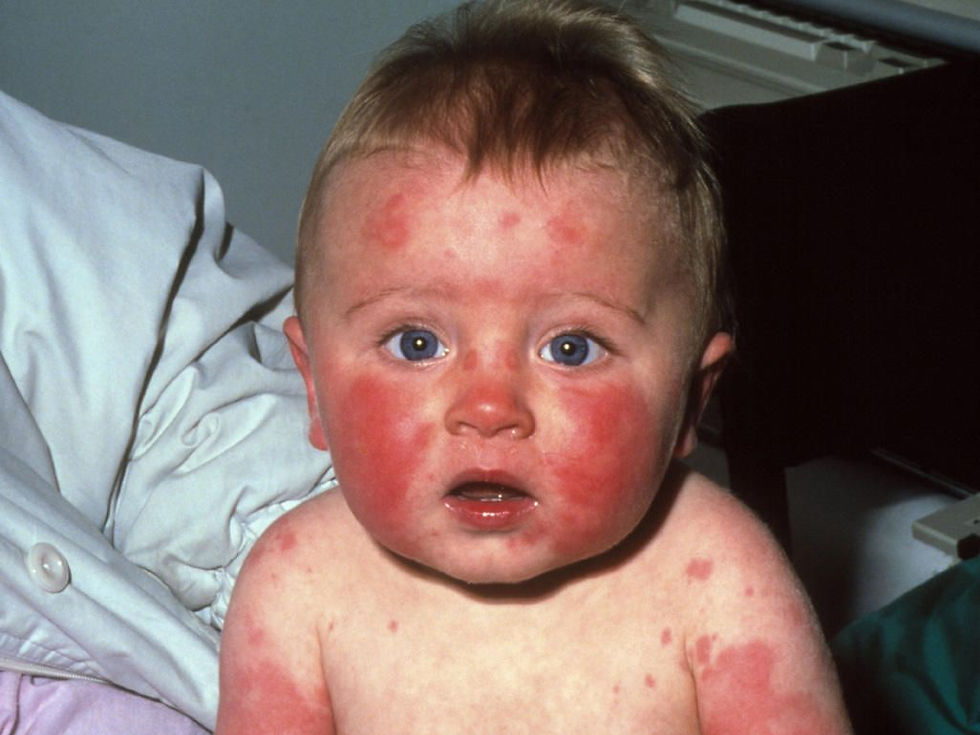
For many people the illness begins like a severe flu. High fever, coughing, runny nose, and inflamed eyes appear first. Small white spots can develop inside the mouth, followed by the distinctive red rash that spreads from the face down across the body. While some patients recover after a miserable week or two, measles is far from
harmless.
The danger lies in what the virus does to the body. Measles attacks the respiratory tract and then spreads through the bloodstream to multiple organs. The infection weakens the immune system, leaving the body vulnerable to other infections that can be far more dangerous than the rash itself. Pneumonia, brain inflammation, and severe dehydration are common complications in serious cases.
Pneumonia is the leading cause of death in measles patients. When the lungs become inflamed and filled with fluid, breathing becomes difficult and oxygen levels fall. In children, especially those who are very young or malnourished, this can quickly become fatal.
Another feared complication is encephalitis, a swelling of the brain that can cause seizures, permanent brain damage, or death.
Even when people survive the initial illness, measles can leave a lasting mark. Some children lose their hearing or eyesight due to complications. Others develop neurological damage that affects them for life. In extremely rare cases, years after the infection appears to have passed, a fatal brain disorder called Subacute sclerosing panencephalitis can slowly destroy brain tissue.
The statistics tell a sobering story. In wealthy countries with strong healthcare systems, roughly one or two people out of every thousand infected may die from the disease. In poorer regions where nutrition and medical care are limited, the death rate can climb dramatically—sometimes several percent of all infections.
Globally, measles still kills tens of thousands of people each year despite the existence of a safe and effective vaccine. In 2024 alone, an estimated 95,000 people—mostly young children—died from the disease.

Before vaccination became widespread in the 1960s, the toll was far worse. Massive outbreaks occurred every few years, and measles was responsible for millions of deaths worldwide. Entire pediatric hospital wards were once dedicated to managing measles complications.
Vaccination changed that story dramatically. The MMR vaccine, which protects against measles, mumps, and rubella, has prevented an estimated 59 million deaths globally since 2000. It remains one of the most effective public-health tools ever developed.
Yet measles has not disappeared. When vaccination rates drop—even slightly—the virus returns quickly. Because it spreads so efficiently, even small pockets of unvaccinated people can allow outbreaks to take hold again. Recent surges in cases around the world have reminded health officials how quickly a disease once thought nearly eliminated can re-emerge.
So, the answer to the question is clear. Measles is not merely a childhood inconvenience or a harmless rash. It is a powerful virus capable of overwhelming the immune system, triggering life-threatening complications, and in some cases, killing those it infects. The fact that it is now largely preventable does not make it less dangerous—only more tragic when outbreaks occur.
And that is the paradox of measles in the modern world: a disease that medicine largely learned how to stop, yet one that continues to claim lives whenever immunity in the population begins to fade.
When vaccination rates drop—even slightly—the virus returns quickly. Because it spreads so efficiently, even small pockets of unvaccinated people can allow outbreaks to take hold again.
Don't believe the BULLSHIT this guy spouts
Total CRANK.

MMR vaccines
Back in 2005, Kennedy wrote a since-retracted and disproven article published by Rolling Stone and Salon, arguing that there was a potential link between vaccines and the rise of autism, and that there was a massive cover-up to hide this risk from the public. Numerous empirical studies in peer-reviewed journals have since proven the claims to be false, and the 1998 study in The Lancet that first alleged a link among the measles, mumps, and rubella (MMR) vaccine and autism was retracted by the journal and found to be fraudulent.


Comments