
Seeing Under Pressure: The Practice of Photographing People on the Street


Street photography begins long before the shutter is pressed. It begins with attention — with learning how to stand still inside a moving world.
On the street, nothing waits. Light shifts across faces without warning. Bodies enter and exit frames on their own terms. Expressions appear fully formed and disappear just as quickly. The photographer is not directing events but responding to them, making decisions under pressure with no opportunity for revision.
This unpredictability is not a flaw; it is the medium.
To photograph people in public is to accept uncertainty as a working condition. Technical choices must often be resolved in advance: exposure set for changing light, focus anticipated rather than hunted, composition imagined before the subject arrives. Many street photographers simplify their tools for this reason — a single camera, a familiar focal length, settings chosen to allow immediate response. The less time spent adjusting, the more time spent seeing.
But the difficulty is not only technical. Raising a camera toward a stranger carries psychological weight. It asks the photographer to negotiate fear, hesitation, and the desire to disappear. Each photograph is a small act of presence. Over time, this practice reshapes how one moves through public space — slower, more observant, more attuned to human behavior.
People are not static subjects. They communicate constantly through posture, pace, and gesture. Learning to read this language is as important as understanding light. A glance over the shoulder, a pause at a crosswalk, a shift in weight — these signals often reveal more than expressions themselves. The strongest images tend to come from anticipation rather than reaction.
Ethics operate quietly but continuously. Not every visible moment deserves to be captured. The distinction between observation and intrusion is subtle and situational. Images built on dignity, context, and ambiguity tend to endure; those that rely on exposure or ridicule often collapse under closer viewing. Ethical judgment is not separate from photographic skill — it is part of it.
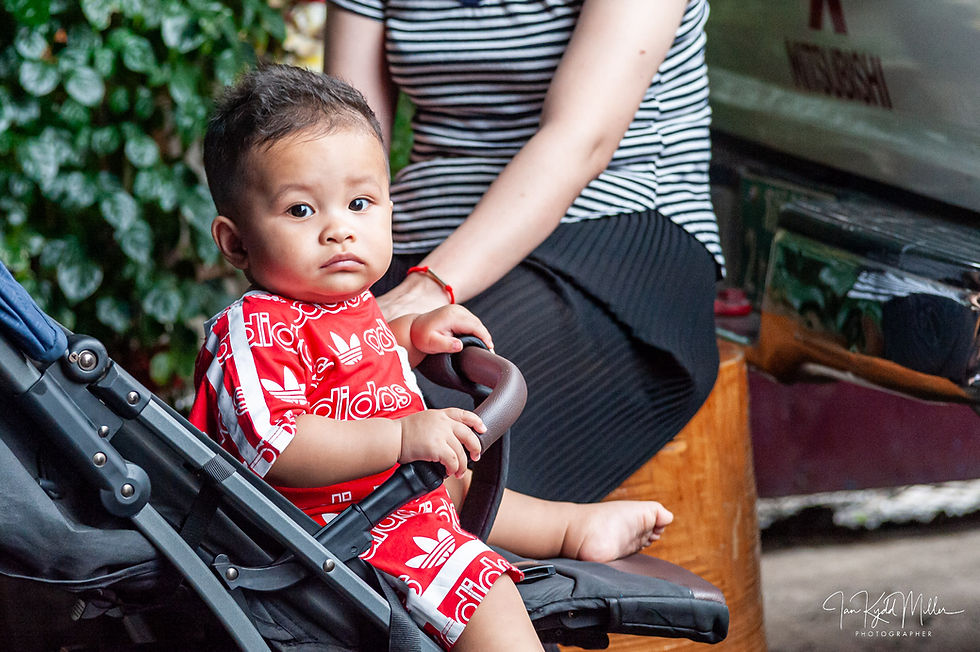
Patience is the street photographer’s most underrated tool. Waiting allows space for compositions to assemble themselves: for light, subject, and background to align. Shooting less, but with greater intent, often produces images that feel coherent rather than frantic.
What makes street photography rewarding is not only the resulting photograph, but the transformation of perception that accompanies the practice. The street becomes legible. Chaos resolves into patterns. What once felt overwhelming begins to feel readable.
Street photography teaches how to look clearly under imperfect conditions — technically, emotionally, and ethically. It is not about control, but about responsiveness. Not about extracting images, but about recognising moments when form, behaviour, and atmosphere briefly converge.

When it works, the photograph does not announce itself. It simply holds. A fragment of time. A trace of attention. Proof that ordinary life, when truly seen, is never ordinary at all.


Comments