
The current UK Prime Minister, Keir Starmer? a BAD CHOICE ???
- Ian Miller

- Mar 6
- 4 min read
The rise of Keir Starmer to the position of Prime Minister was the result of a long political reset inside the Labour Party, and it reflects the turbulent decade British politics has endured since the Brexit referendum. Starmer, a former human rights lawyer and Director of Public Prosecutions, first entered Parliament in 2015 and quickly became known for a careful, legalistic style rather than ideological grandstanding. When Labour suffered a devastating defeat under Jeremy Corbyn in the 2019 United Kingdom general election, the party was fractured, internally bitter, and widely viewed by many voters as unelectable. Starmer stepped forward promising competence, discipline, and a return to political credibility.

That promise resonated with a large portion of Labour members who felt the party had drifted too far into internal ideological battles. When Starmer became leader in 2020, his first mission was essentially a political cleanup operation. He moved to distance Labour from controversies that had surrounded the Corbyn era, particularly allegations of antisemitism within party ranks. Some members praised this as a necessary step to rebuild trust with the public. Others believed he used the issue as a pretext to purge the party’s left wing. Figures who had once been influential in Labour’s activist base suddenly found themselves marginalized or expelled.

Starmer’s leadership style quickly became clear: methodical, cautious, and disciplined. Rather than promising sweeping socialist transformation, he focused on rebuilding Labour’s image as a responsible governing party. This meant emphasizing fiscal responsibility, support for NATO, and a pragmatic approach to economic policy. Critics on the left accused him of abandoning core Labour values, arguing that the party under Starmer began to resemble a slightly softer version of the Conservatives. Supporters countered that ideological purity had already led Labour to electoral disaster and that winning power had to come first.
Meanwhile, Britain was going through a prolonged period of political exhaustion. After years of upheaval involving Boris Johnson, Liz Truss, and Rishi Sunak, many voters simply wanted stability. Johnson’s government had been rocked by scandal, including the “Partygate” controversy during the COVID-19 lockdowns. Truss lasted only weeks in office after her economic policies triggered turmoil in financial markets. Sunak restored some stability but struggled with inflation, public services under strain, and widespread voter fatigue with Conservative rule.



By the time a general election arrived, the political mood had shifted. The Conservative Party faced deep unpopularity after more than a decade in power. Labour’s strategy under Starmer was not to promise revolutionary change but to present itself as the calm, competent alternative. The strategy worked. Labour won a strong parliamentary majority, and Starmer became Prime Minister.
But the criticisms began almost immediately.
One of the most common critiques of Starmer is that he appears overly cautious. Opponents argue that Britain faces deep structural problems—stagnant wages, a housing shortage, struggling public services, and regional inequality—and that his policies do not go far enough to address them. Instead of sweeping reforms, critics say he prefers incremental adjustments and technocratic management.
Another criticism focuses on political identity. Many traditional Labour supporters expected a government that would aggressively challenge economic inequality. Instead, Starmer has emphasized fiscal restraint and partnership with business. To some on the left, this feels like a betrayal of Labour’s historic mission. They argue that the party has drifted toward the political center to such an extent that it risks losing its ideological soul.
Within the party itself, Starmer’s leadership has also been controversial. Several prominent figures have been disciplined or sidelined for comments about internal policy disputes or foreign policy issues. His supporters argue that party unity is essential to govern effectively. His critics argue that internal democracy has been weakened and dissent suppressed.





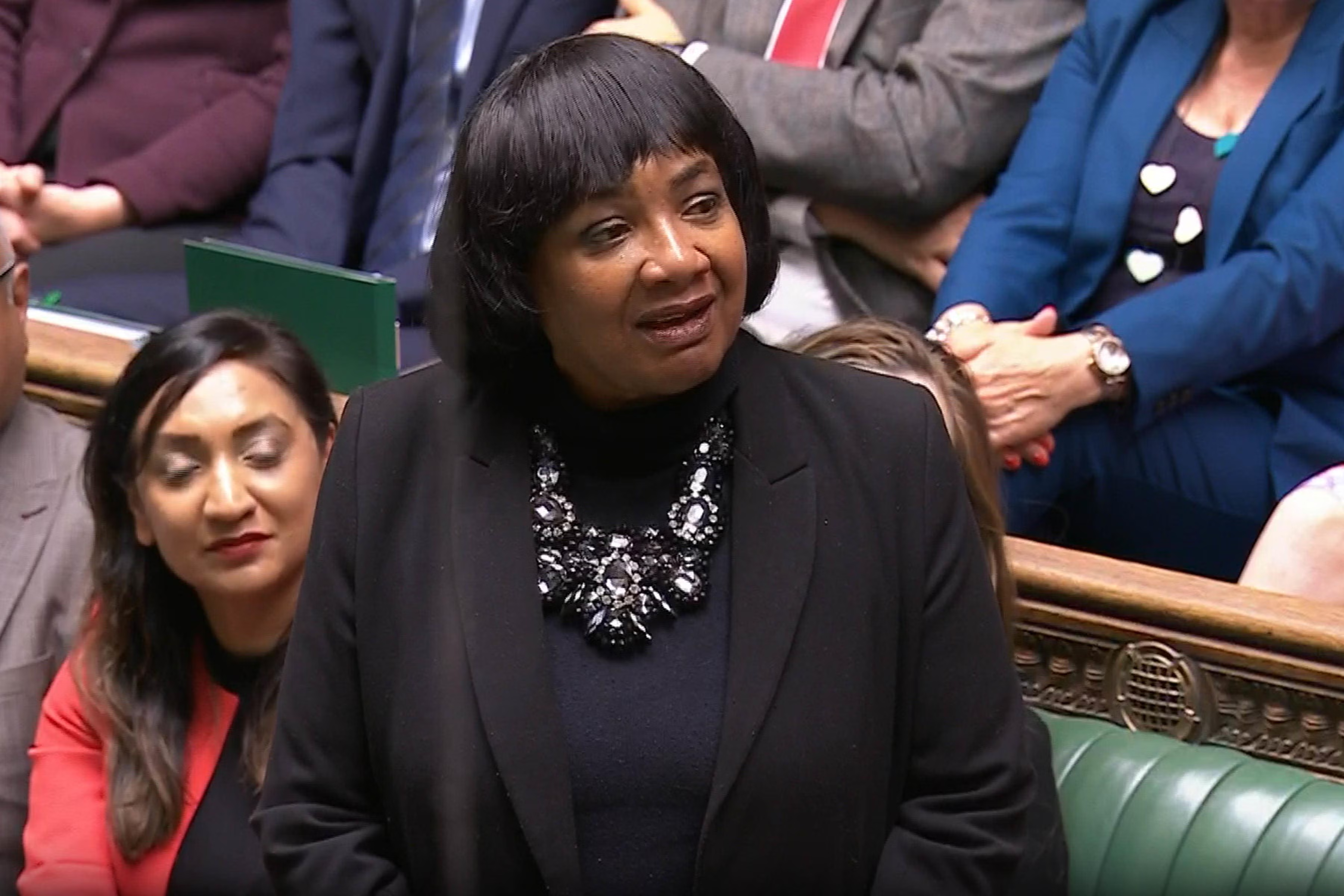
Another flashpoint has been foreign policy. Starmer has maintained strong support for NATO and traditional Western alliances, which aligns with mainstream British foreign policy thinking. However, activists in some parts of Labour have criticized the government’s stance on conflicts in the Middle East and its alignment with U.S. policy positions. These disagreements have sparked protests, resignations among local officials, and heated debates inside the party.
Public perception is also a challenge. Starmer is widely respected for his intelligence and professional background, but many observers say he lacks the charisma that often helps political leaders connect emotionally with voters. Compared with more theatrical figures like Johnson or the passionate rhetoric of Corbyn, Starmer’s lawyerly communication style can appear distant or overly scripted. Supporters call this seriousness; critics call it blandness.
Despite the criticism, there are also strong arguments in his favor. Many political analysts believe Starmer’s disciplined approach is exactly what allowed Labour to regain power after years in opposition. By reassuring moderate voters and business leaders, he broadened Labour’s appeal beyond its traditional base. In a country where elections are often won in politically mixed constituencies rather than ideological strongholds, that strategy proved effective.
Supporters also argue that governing a country is very different from campaigning. Once in power, any government must confront fiscal realities, international obligations, and economic constraints. Starmer’s defenders say his cautious approach reflects the practical limits of governing rather than a lack of ambition.
In the end, whether Starmer is seen as a “bad choice” depends largely on what people expected from a Labour government. For those who wanted a transformative political shift, his leadership can feel underwhelming or even disappointing. For those who wanted stability and a reset after years of chaos, his calm and pragmatic style may feel reassuring.
British politics, as always, is an evolving story. Leaders who initially seem uninspiring can grow into their roles, while others who enter office with great fanfare can quickly falter. Starmer’s long-term reputation will likely depend less on how he won power and more on what changes he ultimately manages to deliver for the country.


Comments