
The Donald tRump story
- Ian Miller

- Mar 10
- 7 min read
Updated: Mar 11
Donald Trump’s life reads less like the career of a conventional statesman than like a long-running American serial—part inheritance saga, part tabloid opera, part television spectacle, part constitutional stress test. He was born in New York City on June 14, 1946, the son of Fred Trump, a wealthy outer-borough real-estate developer, and Mary Anne MacLeod Trump. He attended the New York Military Academy, began college at Fordham, transferred to the Wharton School of the University of Pennsylvania, and then entered the family business, eventually recasting it as the Trump Organization.

From the start, the money mattered. Trump did not emerge from nowhere, bootstraps in hand, but from a family already planted in the lucrative soil of New York property. What he added was scale, appetite, and above all a near-mystical devotion to publicity. Fred Trump had built housing; Donald Trump built a public self. He pushed from Queens and Brooklyn into Manhattan, where visibility was more valuable than brick. Towers, hotels, casinos, golf clubs, and licensing deals followed, but the true commodity was not simply real estate. It was his surname, stamped in gilt on facades and sold as shorthand for glamour, aggression, and wealth. Reuters noted that long before his second presidency, Trump had already put his name on buildings, golf courses, vodka, steaks, bottled water, and even Trump University—an empire in which branding often seemed as central as the underlying business.
The early “gory details,” if that is the right phrase, are not bloody so much as revealing. In the 1970s, the Justice Department sued Trump Management, the company run by Donald Trump and his father, alleging racial discrimination against Black renters. Reuters’ review of the historical record notes that federal investigators examined allegations that the company steered or excluded African-American tenants. Trump denied wrongdoing, but the case fixed an early pattern: denial, counterattack, settlement without confession, and then forward motion as if scandal were merely weather.

Then there was Roy Cohn, the ruthless lawyer and fixer who helped teach Trump that counterpunching was not merely a tactic but a worldview. PBS and Frontline describe Cohn as a formative mentor—someone who helped Trump approach conflict as permanent war: never apologize, never admit error, always attack harder than the accusation. That ethos did not stay in the background. It became the operating system.
By the 1980s and 1990s, Trump was no longer just a developer. He had become a tabloid creature, a New York character whose divorces, affairs, boasts, and financial turbulence helped make him famous well beyond the city. The casinos in Atlantic City, the churn of debt, and the restructurings and bankruptcies turned him into a paradoxical national symbol: a man who could be described as a business genius by admirers and a chronic self-promoter propped up by inherited wealth and creditor accommodations by critics.
Britannica’s summary of his business rise captures this shift from family landlordism to celebrity capitalism.
Television finished the transformation. “The Apprentice” was not just a hit show; it was a myth factory. Trump played an exaggerated version of himself—a sovereign of polished boardrooms, arbiter of success and humiliation, dispenser of the ritual phrase “You’re fired.” For many Americans, that performance became more real than any balance sheet. The country did not merely see a businessman. It saw a character: decisive, rich, theatrical, infallible in his own narration. Britannica notes that this media fame became central to the public identity he later carried into politics.
The darker details kept accumulating. In 2016, shortly before the presidential election, the “Access Hollywood” tape burst into public view, featuring Trump making vulgar comments about women. Reuters reported later that Billy Bush publicly reaffirmed the tape’s authenticity after Trump privately suggested otherwise, and a federal judge in the E. Jean Carroll litigation allowed excerpts to be considered as relevant evidence of pattern and intent. The tape mattered not only because it was obscene, but because it revealed a familiar element of Trump’s style: the fusion of entitlement, performance, and degradation into a single public voice.
That same year, Trump also agreed to a $25 million settlement over lawsuits involving Trump University, a venture accused of misleading students with promises about real-estate education. PBS reported that the settlement resolved three suits without Trump admitting wrongdoing, but it reinforced a long-running tension in his public life: the distance between the branded promise and the underlying reality.
His political rise was, in one sense, improbable: in another, almost inevitable. Trump had flirted with candidacies before, but in 2015 he descended the escalator and found that his instincts—nativist, anti-elite, media-savvy, contemptuous of decorum—matched a mood already boiling inside the Republican base. He attacked immigration, trade deals, establishment Republicans, and the press, and he did so not in the language of policy white papers but in the language of grievance and domination. In 2016 he defeated Hillary Clinton and became the 45th president of the United States. Britannica records the constitutional milestones plainly; what it cannot quite capture is the aesthetic shock of the thing, the sudden sense that tabloid energy had breached the walls of the republic.
His first term was marked by relentless polarization. Supporters credit him with conservative judicial appointments, tax cuts, deregulation, and a hard line on immigration and trade. Critics point to repeated falsehoods, attacks on democratic norms, efforts to pressure institutions to serve personal and political ends, and a style of public life built on division as method. Reuters and Britannica both describe a presidency defined as much by conflict and disruption as by formal policy.
He became the only American president to be impeached twice. The first impeachment, in 2019, stemmed from his dealings with Ukraine and allegations of abuse of power and obstruction of Congress. The second followed the January 6, 2021 attack on the Capitol, after he spent weeks promoting false claims that the 2020 election had been stolen. He was acquitted by the Senate both times, but the fact of the two impeachments stands as one of the stark markers of how abnormal his presidency was in institutional terms.

The post-2020 period added another layer of extremity. Trump lost to Joe Biden, refused to concede, and became the central figure in efforts to overturn the result. Reuters reported in 2023 that he was federally indicted over what prosecutors described as a wide-ranging attempt to subvert the 2020 election outcome. In Georgia, he surrendered at Fulton County Jail and became the first former U.S. president to have a mug shot taken, an image that he and his allies almost immediately converted into political merchandise and martyr iconography. Even humiliation, in Trump’s ecosystem, could be repurposed as fuel.
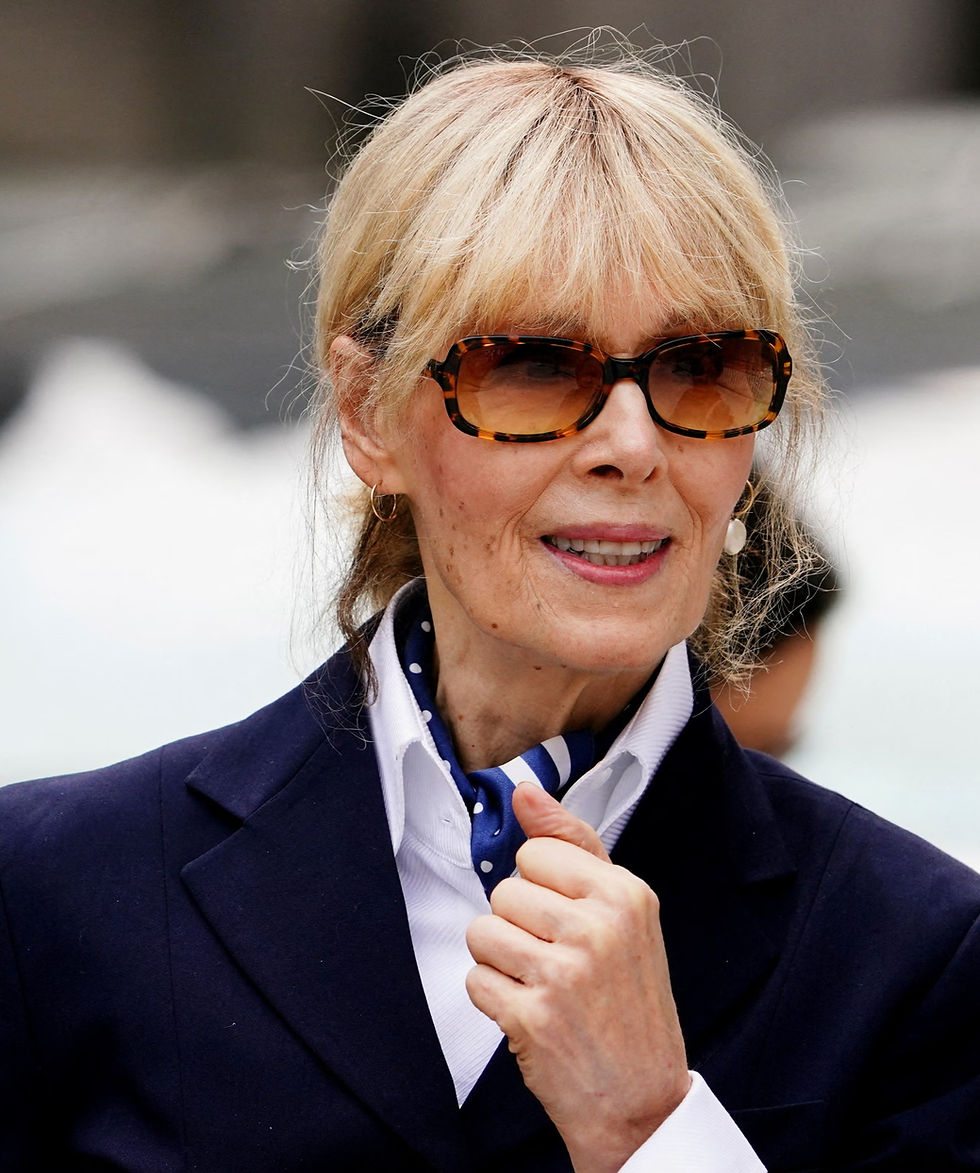
The legal record around him is unusually dense and unusually sordid. In May 2023, a jury found Trump liable for sexually abusing writer E. Jean Carroll and for defaming her, awarding $5 million. Reuters later reported that in January 2024 another jury ordered him to pay Carroll $83.3 million in a separate defamation case, and in 2025 an appeals court left that verdict in place. These were civil cases, not criminal convictions, but they placed on the public record a devastating judicial rebuke.
Then came the hush-money case, the one that crossed a new threshold. In May 2024, a New York jury convicted Trump on 34

felony counts of falsifying business records tied to a payment meant to suppress a damaging story before the 2016 election. Reuters described it as a historic first: never before had a current or former U.S. president been criminally convicted. Whatever one thinks of the case politically, that fact alone altered the historical description of Trump forever. He was no longer merely scandal-ridden or accused. He was convicted.
And yet the great Trump twist is always the return. On January 20, 2025, he was sworn in as the 47th president, becoming only the second U.S. president to win nonconsecutive terms. Reuters and the White House record the event in their different idioms—one cool and factual, the other celebratory—but both capture the astonishing constitutional reality: a man twice impeached, criminally convicted, and still restored to office by the electorate.

His second presidency has continued the themes that made him. Reuters reports that he returned to office promising a “Golden Age,” while pressing aggressive policies on immigration, executive authority, tariffs, and foreign affairs. Reuters also notes how he has increasingly merged the Trump brand with the functions and symbols of government itself—an unusual intensification of a tendency already visible in his first term. This is one of the most revealing things about him: he does not seem to experience a clear boundary between the office and the self. The state, in his imagination, often looks like a stage set onto which the Trump brand can be projected.
So what is Donald Trump, finally? He is at once an heir and an insurgent, a rich man who speaks in the tones of injury, a celebrity who convinced millions he was the enemy of the cultural elite, a salesman who sold not just products but a mood, a politician whose every disgrace somehow seemed to enlarge him in the eyes of followers who read persecution where others saw accountability. The “gory details” of his life are not just the tape, the lawsuits, the allegations, the porn-star payoff, the mug shot, the civil verdicts, the impeachments, or the criminal conviction—though all of those belong to the record.
They are also the deeper facts of temperament: the appetite for humiliation as spectacle, the instinct to dominate every room, the allergy to apology, the belief that attention is victory and that moral stigma can be transmuted into charisma if one refuses shame long enough.
To admirers, those qualities read as strength, refusal, stamina, even authenticity.
To critics, they read as narcissism weaponized, a politics of appetite wrapped in patriotism, a man who treats institutions as props and truth as negotiable. That divide is not incidental to Trump. It is the essence of him. He is not simply a politician who happens to be polarizing. He is a figure who draws power from polarization itself.


Comments