
Women’s Rights in Iran
- Ian Miller

- Mar 11
- 5 min read
In Iran, the story of women’s rights is not a static portrait but a long, uneasy argument between authority and defiance—an argument written into law, enforced in the street, and contested every day by millions of women who live within its boundaries. The state insists it protects women through religion. Many women say the same system governs their lives with a heavy and unrelenting hand.

The Islamic Republic was born in 1979 from a revolution that toppled the shah and replaced a monarchy with a theocratic republic. In the revolutionary fever that followed, the new leadership moved quickly to reshape social life according to its interpretation of Islamic law.
One of the earliest and most symbolic acts was the imposition of compulsory veiling. Within weeks of the revolution, thousands of Iranian women marched in protest through Tehran, chanting against the idea that their clothing should be dictated by the state. The demonstrations were ignored. By 1983, the requirement had become law: women appearing in public without a head covering could be punished with fines, imprisonment, or lashes.
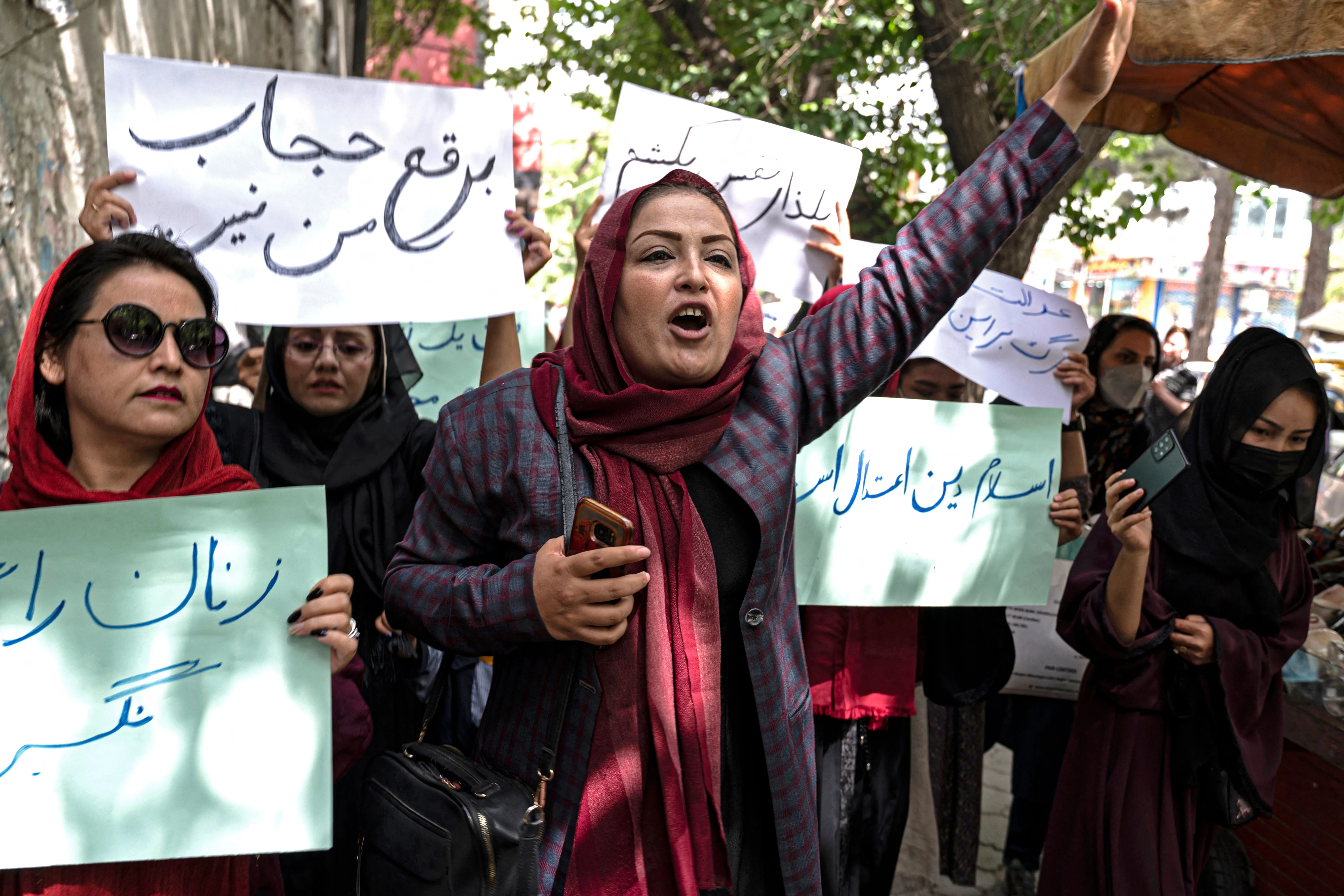


The rule was never only about fabric. It became a visible sign of the broader system of gender hierarchy embedded in Iranian law. Women could vote, work, attend university, and even hold seats in parliament. Yet the legal framework surrounding their lives was distinctly unequal. A woman’s testimony in certain courts could count as half that of a man. Inheritance law typically allotted daughters half the share granted to sons. In marriage, husbands retained broad authority. A man could divorce more easily than his wife and, under the law, could restrict her ability to travel or work.
These rules did not prevent Iranian women from becoming one of the most educated female populations in the Middle East. Universities filled with young women in the decades after the revolution. Today, women often constitute a majority of students in Iranian higher education. Doctors, engineers, scientists, and artists emerge from these classrooms in large numbers. Yet this educational success exists alongside stark limitations in public life. Female participation in the labor force remains far lower than in many comparable countries.
Leadership positions in politics and the judiciary remain overwhelmingly male. Women cannot become the country’s Supreme Leader, and the legal interpretation of the constitution has effectively prevented them from running for the presidency.
The enforcement of social rules has often fallen to institutions that blur the line between law enforcement and ideological policing. For decades the so-called “morality police” patrolled Iranian cities, monitoring dress codes and behavior. Their presence turned something as mundane as walking down a street into a negotiation with authority. A scarf worn too loosely, a strand of hair showing, a coat judged too short—any of these could trigger confrontation.

In September 2022, that system produced an event that shook the country. A 22-year-old Kurdish Iranian woman, Mahsa Jina Amini, was detained by morality police in Tehran for allegedly violating the dress code. Within days she was dead. Authorities insisted she suffered a medical episode. Witnesses and family members
said she had been beaten. News of her death spread with astonishing speed, igniting protests across Iran that quickly evolved from outrage over the hijab laws into a broader challenge to the authority of the state.
The slogan that emerged from the demonstrations—“Woman, Life, Freedom”—captured both the immediacy and the ambition of the movement. Women publicly removed their headscarves, cut their hair in symbolic acts of defiance, and marched in streets where protest had long been suppressed. The government responded with force. Thousands were arrested. Security forces confronted demonstrators with live ammunition, tear gas, and mass detentions. Yet the protests left a mark that cannot easily be erased. In many cities, women began quietly pushing the boundaries of the dress code, testing how far the state would go to enforce it.
What makes the question of women’s rights in Iran so complex is the coexistence of restriction and resilience. Iranian women are not passive figures waiting for change. They have built professional careers, cultural influence, and networks of activism despite legal obstacles. Writers, filmmakers, lawyers, and journalists have repeatedly challenged the system from within it. Some have paid heavy prices: imprisonment, exile, or professional bans.
The government, for its part, frames the issue differently. Officials argue that Western criticism misunderstands Iranian culture and religion. They say the country offers women dignity and protection within an Islamic framework. The state often points to high levels of female education and the presence of women in medicine and academia as evidence that the system works.
The tension between these narratives—between official ideology and lived reality—defines much of contemporary Iranian society. The state has the power of law and coercion. Women have numbers, persistence, and a long tradition of resistance.
It is tempting to view the struggle purely through the lens of protest movements and headlines. But much of the change in Iran happens quietly: in classrooms, workplaces, art studios, and homes. Every generation of Iranian women inherits a system that attempts to define their role. And every generation, in ways large and small, tests the limits of that definition.
The result is a country where the question of women’s rights remains unresolved argued not only in courts and parliaments, but in daily acts of compliance, negotiation, and rebellion. In Iran, the debate over women’s place in society is not merely political. It is one of the central stories of the nation itself.
Postscript.
It would be a mistake to end the story of Iranian women only in the language of restriction and confrontation. There is another, quieter truth that deserves mention. Iran’s women—despite the legal barriers placed before them—have built lives of remarkable intellectual and cultural achievement. Walk through a university campus in Tehran, Isfahan, or Shiraz and the lecture halls are filled with women studying medicine, physics, engineering, literature. In many disciplines they form the majority of students, a fact that would have been unimaginable a century ago.
Iranian women are surgeons, poets, filmmakers, mathematicians, and entrepreneurs. Their films win international awards. Their research appears in scientific journals around the world. Their art circulates through galleries in Paris, Berlin, and New York. Even within the confines of a restrictive political system, they have carved out spaces for creativity, scholarship, and influence.
This matters, because education and cultural presence are powerful forces that rarely move backwards for long. A society in which women are deeply educated and intellectually visible is one that inevitably continues to question the limits placed upon them. History suggests that once those expectations take root, they become extraordinarily difficult to suppress permanently.
For that reason, the story of women in Iran is not simply one of constraint. It is also a story of resilience, ambition, and an insistence—sometimes quiet, sometimes thunderous—that the future of the country will include them as full participants in its life.


Comments