
A war of accusations — and bodies on both sides.

Yet this war — like most modern wars — refuses to stay morally tidy.
Human rights groups have also pointed in the other direction.
Israeli and US strikes on Iranian infrastructure have been described as “unlawfully indiscriminate”, potentially amounting to war crimes due to their wide civilian impact.
A UN fact-finding body found reasonable grounds to believe that an Israeli strike on Tehran’s Evin prison — a detention facility, not a battlefield — constituted a war crime.
And across the region, the pattern is repeating:cities, energy facilities, homes — all increasingly part of the target map.
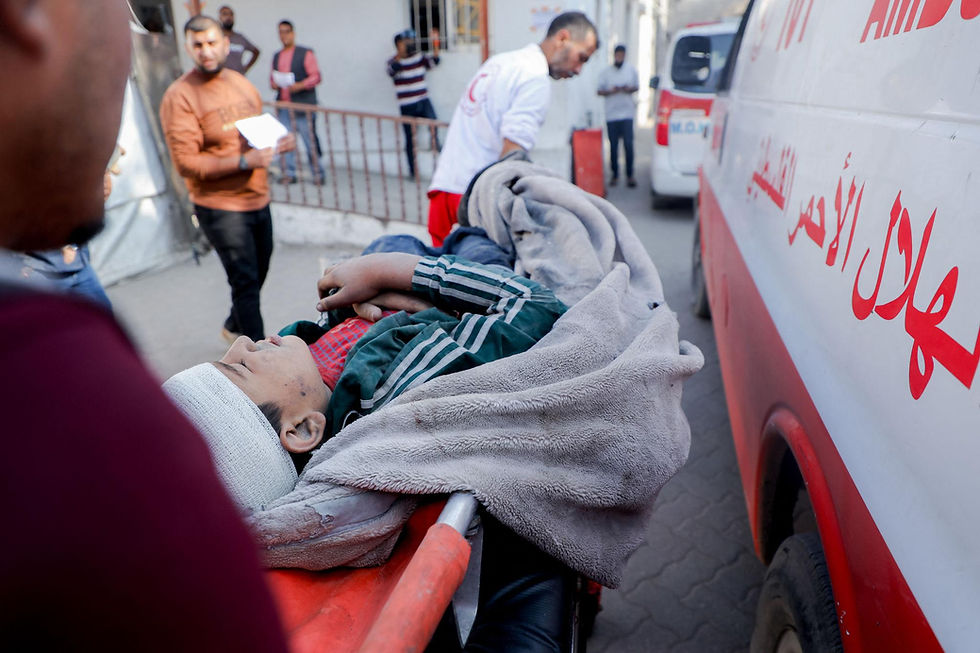
The UN’s human rights chief has warned that the conflict is drifting toward densely populated areas, where civilian harm is no longer incidental but inevitable.
The language of law, the reality of war
“War crime” is not a slogan — at least, it isn’t supposed to be. It has a specific meaning:
You cannot deliberately target civilians
You cannot use weapons that are inherently indiscriminate
You must distinguish between military and civilian targets
But here’s the fracture point: modern warfare — missiles, drones, urban battlefields — makes that distinction harder to prove, and easier to deny.
Each side claims:
“We targeted military assets”
“Civilian deaths were unintended”
Each side points to the other’s dead.
What remains
Strip away the rhetoric, and what you’re left with is this:
Civilians in Israel have been killed by Iranian strikes
Civilians in Iran and the wider region have been killed by Israeli and allied strikes
Independent observers are increasingly warning that both sides may be crossing legal lines
And somewhere between accusation and counter-accusation, the meaning of the word war crime starts to erode — not because it’s wrong, but because it’s everywhere.
One strike, under the microscope
There’s a temptation, in a war like this, to talk in sweeping terms — campaigns, retaliation, deterrence. But the law doesn’t work like that. It works case by case. Impact by impact. Body by body.
So take one incident — the Iranian missile strike on a residential area in Beit Shemesh — and hold it still long enough to ask the only questions that matter.
What happened
A missile struck a civilian neighbourhood west of Jerusalem.
Nine people were killed, including children.
Homes were flattened or partially collapsed; survivors described blast damage, shrapnel, and fire.
There was no publicly confirmed military target at or near the point of impact.
Independent investigators, including Amnesty International, later examined the strike and concluded the weapon used was likely inherently indiscriminate in that setting.
The legal test (plain English, no fog)
International humanitarian law doesn’t ask who fired first. It asks three blunt questions:
1. Was there a legitimate military target?
If not, the strike leans immediately toward illegality.
➡️ In this case: no clear evidence of a military objective nearby.
2. Was the weapon capable of being precise?
Some weapons are too blunt for cities — they spread destruction beyond control.
➡️ The missile used was assessed as unsuitable for densely populated areas.That matters. Even if you intend to hit something lawful, using the wrong weapon can still be a war crime.
3. Was civilian harm proportionate?
Even when hitting a valid target, you cannot cause excessive civilian harm relative to the military gain.
➡️ Here, with no confirmed target, the proportionality argument becomes almost impossible to justify.
What investigators are actually saying
Groups like Amnesty International don’t use dramatic language lightly.
Their position on this strike, in substance:
The attack appears indiscriminate
It may amount to a war crime
It requires formal, independent investigation
That last line matters. “War crime” is not a headline — it’s a legal conclusion that normally comes after forensic analysis, intelligence review, and, in theory, a court.
The defence you’ll hear
Iran — like any state accused of this — is likely to argue one or more of the following:
The strike targeted a military objective (not publicly disclosed)
Civilian deaths were unintended collateral damage
Responsibility is blurred by urban warfare conditions
These claims are standard. Sometimes they’re true. Sometimes they collapse under scrutiny. That’s why independent verification matters.
What makes this case cut through
There are dozens of strikes in any modern conflict. Most fade into the blur.
This one doesn’t, for three reasons:
Children were among the dead — which always sharpens scrutiny
No obvious military target — which weakens legal justification
Weapon choice — which may itself violate the law
Put those together, and the legal risk escalates fast.
The uncomfortable truth
If you run the same three questions — target, weapon, proportionality — over other strikes in this war, including those carried out by Israel, you start to see a pattern.
Not symmetry in politics.But symmetry in accusation.
Bottom line
This specific strike has credible indicators of being unlawful
It may qualify as a war crime, pending full investigation
It sits inside a wider conflict where similar allegations exist on both sides
And that’s the part people tend to look away from:
War crimes aren’t declared by press conference. They’re built — slowly, methodically — from scenes exactly like this one.

Israel’s outrage at Iran’s alleged use of cluster munitions lands with a certain metallic clang. Because Israel itself has a long, well-documented record with weapons that international humanitarian groups describe as indiscriminate, incendiary, or unlawful when used near civilians.
The clearest current case is white phosphorus. Human Rights Watch says Israeli forces used artillery-fired white phosphorus over homes in Yohmor, southern Lebanon, on 3 March 2026, verifying and geolocating images showing airburst munitions over a residential area.
This was not an isolated allegation. HRW said in 2024 it had verified Israeli white phosphorus use in at least 17 municipalities in south Lebanon since October 2023, including several populated areas. Amnesty also said an Israeli white phosphorus attack on Dhayra, Lebanon, on 16 October 2023 injured civilians and should be investigated as a war crime.
Legally, white phosphorus is tricky: it is not totally banned. It can be used for smoke screens, illumination, or marking. But incendiary weapons are restricted under Protocol III of the Convention on Certain Conventional Weapons, especially in civilian concentrations; Israel has not ratified that protocol.
Then there are cluster munitions. These are widely banned under the 2008 Convention on Cluster Munitions because they scatter bomblets over wide areas and leave unexploded ordnance that kills years later. Israel is not party to that treaty, but its 2006 use in Lebanon remains notorious: HRW documented extensive Israeli cluster-munition use, and later reporting described roughly one million submunitions left across southern Lebanon, with an estimated 35% failure rate.
More recently, The Guardian reported arms experts’ analysis suggesting Israel used newer cluster munitions in Lebanon during the war with Hezbollah — the first reported Israeli use since 2006.
Bottom line
Israel can accuse Iran of unlawful civilian targeting. But when it does so while having its own documented record of white phosphorus and cluster-munition use, the accusation becomes less a moral high ground than a legal mirror.
The charge is not simply hypocrisy. It is worse: a region where states condemn the weapons when they fall on their own civilians, and rationalise them when fired by their own side.


Comments