
Marko Elez: From Tech Prodigy to Political Firestorm

The improbable rise — and reinvention — of a 25-year-old engineer at the center of a national controversy.
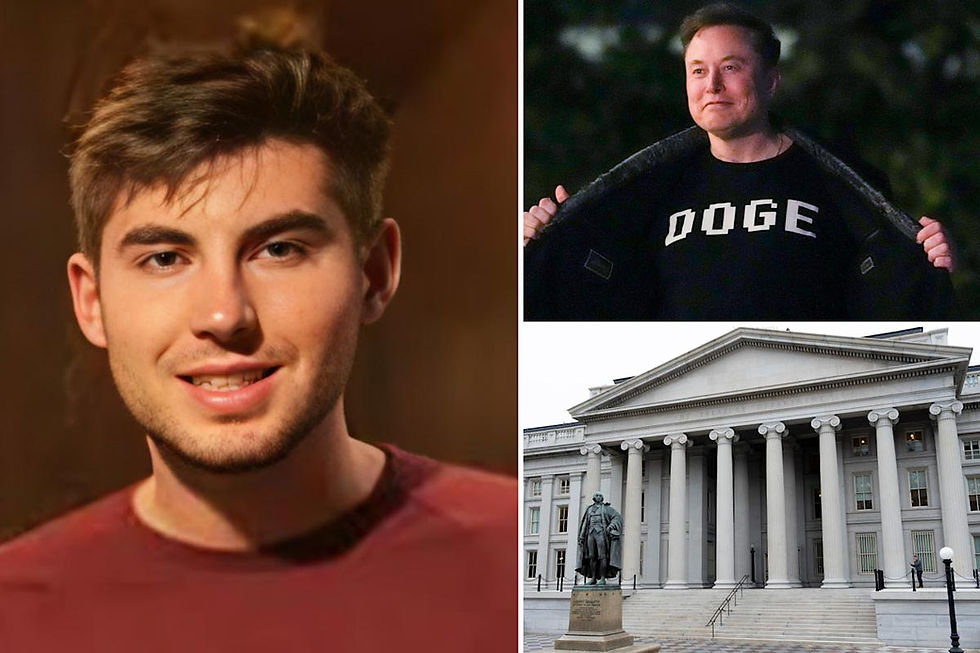
1. The Quiet Beginnings of a Silicon Valley Engineer
In the leafy suburbs of Montgomery Township, New Jersey, Marko Elez grew up not unlike many ambitious young technologists who would come of age in the decade after the smartphone revolution. Born in 1999 or 2000, Elez showed early promise — graduating from Montgomery High School in 2018, a year ahead of many of his peers. There, he wasn’t just a student buried in books; he played on the soccer team, a detail that humanizes a figure later thrust into polarizing headlines.
From there, his trajectory pointed squarely toward technology and innovation. He proceeded to Rutgers University, where he completed a computer science degree in 2021 — notably a year early — distinguishing himself with academic rigor and a knack for complex systems. Summers saw him interning at Amazon, working on algorithms to optimize delivery routing — the sort of deep-engineered tasks that often portend a career at elite tech companies.
He soon landed positions at SpaceX and X (formerly Twitter): two companies under the leadership of Elon Musk. At SpaceX, Elez worked on telemetry for rockets and satellite software; at X, his portfolio reportedly included AI search development and other advanced engineering roles. These were not simple contributor tasks — these were the kinds of systems foundational to high-stakes tech operations.
So far, his career sounds like a typical Silicon Valley startup prodigy, but it’s what happened when that trajectory intersected with politics that turned his life into a story of national controversy.

2. Into the Political Fray: DOGE and the U.S. Government
In late 2024 and early 2025, the United States saw an unexpected experiment in federal governance. Under President Donald Trump’s administration, tech titan Elon Musk was appointed to lead a novel initiative called the Department of Government Efficiency (DOGE) — a body intended to embed private-sector technologists into government agencies to overhaul bureaucracy, cut waste, and modernize federal operations.
For Elez, this meant a shift from private sector to public service — of an unusual type. He was assigned as a special government employee embedded within the U.S. Treasury Department, specifically attached to the Bureau of the Fiscal Service (BFS). The BFS handles the lion’s share of federal payments, including Social Security benefits, tax refunds, and an amount of annual federal disbursements measured in the trillions of dollars.
Taken together, this was meteoric: a 25-year-old engineer with no prior government experience now positioned in proximity to the nation’s financial control systems.
3. Behind the Screens: Treasures of the Treasury
To appreciate why Elez’s work raised eyebrows, it helps to understand the systems he touched.
Payment Automation Manager (PAM)
This is a core system used to schedule and authorize federal payments.
Secure Payment System (SPS)
A central ledger through which the vast majority of U.S. government funds flow.
According to reports, Elez was granted administrator-level access to both PAM and SPS — meaning he wasn’t just reading data but was positioned to write code affecting systems that control how money moves through government coffers. On its face, this kind of access would be astonishing for any federal employee — let alone a 25-year-old market engineer more familiar with silicon than statutes.
The Treasury initially insisted Elez’s access was limited to “read-only,” but reporting later revealed that for at least a brief period, his privileges included read/write permissions. Treasury officials insisted he did not exercise these privileges to change anything, but the revelation prompted internal investigations and intense public scrutiny.
4. Controversy Ignites: Social Media Shocks
Just as questions began swirling about Elez’s access, another firestorm erupted — this one social, political, and deeply personal.
Journalists from The Wall Street Journal and other outlets linked Elez to a now-deleted social media account — @nullllptr — that contained racist, inflammatory posts. According to archived screenshots, the account included statements such as:
“Just for the record, I was racist before it was cool.”
“You could not pay me to marry outside of my ethnicity.”
“Normalize Indian hate.”
“I would not mind at all if Gaza and Israel were both wiped off the face of the Earth.”
Once these posts were connected to Elez by reporting outlets, pressure mounted from lawmakers, public watchdogs, and civil society. The result: Elez resigned from his DOGE role on February 6, 2025, just days after his access to Treasury systems had been restricted.
To many observers, this was a watershed moment. A young engineer had not only been granted deep access to national financial infrastructure but now was embroiled in a culture war over personal beliefs expressed online — raising urgent questions about vetting, judgment, and how personal conduct intersects with public responsibility.
5. Beyond Resignation: Intrigue and Reinvention
But Elez’s story didn’t end with a resignation notice.
In the weeks that followed, legal filings, court orders, and public commentary revealed that his government career was far from over.
Policy Violations and Legal Scrutiny
Court documents associated with a lawsuit by 19 state attorneys general and nonprofit groups revealed that Elez had violated Treasury policy by emailing an unencrypted spreadsheet containing personal information (such as names, transaction types, and monetary amounts) to other administration officials. Though the data reportedly did not include sensitive identifiers like Social Security numbers, the incident constituted a breach of internal security protocols.
Moreover, the broader legal battle over DOGE’s access to federal systems meant Elez’s name kept surfacing in court filings, affidavits, and policy disputes about how and why political appointees were working within agencies.
Reassignment and New Access
In March 2025, records showed that Elez had been rehired within the federal government — this time detailed to the Department of Health and Human Services (HHS), Social Security Administration, and other agencies. Court filings revealed that he was granted access to systems involving child support enforcement, Medicare and Medicaid payment databases, and HHS contract systems.
Although some of this access was later curtailed, it marked a significant turn: Elez, once forced out at the Treasury after his controversy exploded, was now working within other federal systems — a shift that sparked fresh debate about policy, accountability, and how bureaucratic reforms are implemented when they intersect with private tech networks.
6. The Networks Behind the Headlines
Marko Elez’s story isn’t just a biography; it’s also a prism through which we can see broader intersections of power in modern America:
Elon Musk and the DOGE Initiative
At the center of the controversy is Elon Musk — the billionaire who built SpaceX, Tesla, xAI, and X — and whose influence in Washington skyrocketed in early 2025. Musk led the DOGE initiative, advocating for deep reforms in federal operations by bringing private sector technologists into government. Elez’s hire was part of this wave.
When Elez resigned, Musk did not retreat from the debate; instead, he publicly floated the idea of rehiring him, even polling users on X about whether Elez should be brought back — a tactic that highlighted the blending of social media, public opinion, and institutional decisions.

Political Backing and Pushback
Support for Elez’s return came not only from Musk but from high-profile political figures as well, including Vice President JD Vance, who framed the issue as one of forgiveness and Second Chances for youth. Critics, however, saw deeper implications about how public trust and security are managed.
Meanwhile, Democratic lawmakers, watchdog groups, and former government officials raised alarms about the sweeping nature of DOGE’s access — suggesting that Elez’s situation was symptomatic of larger problems in how federal data and infrastructure were being entrusted to politically aligned technologists.

The Legal Battleground
The controversy spilled into the courts, where judges issued orders restricting DOGE personnel from accessing core payment systems and demanded disclosures about how these hires were vetted and how data was handled. These cases often cited Elez’s access, adding a layer of judicial oversight to an already fraught situation.
7. What This Means: A Broader Cultural Moment
Marko Elez’s story is more than a biographical footnote; it’s a lens into multiple converging trends shaping public life in the 2020s:
Tech meets government: Private sector innovation cultures are increasingly colliding with public institutional expectations.
Online conduct has consequences: Past social media activity now carries potential professional and civic ramifications, especially in public-facing roles.
Data security is national security: Granting wide access to federal systems invites scrutiny over how trust, competence, and oversight intertwine.
Politics and personality: Public debate now often swirls as much around character and cultural signaling as around policy.
Marko Elez’s chapter in this era — whether viewed as a cautionary tale, a story of redemption, or a sign of systemic institutional change — will likely be dissected for years to come.
8. A Final Reflection
From Soccer Fields to Federal Databases, the arc of Marko Elez’s public career is a riveting, fraught, and undeniably modern American saga. It poses uncomfortable questions about governance, accountability, and the role of technologists in shaping civic infrastructure. Whether his contributions ultimately help reshape government efficiency or become a case study in institutional missteps will depend as much on the courts, the public, and the broader political landscape as it does on one engineer’s choices.


Comments