
Poverty & Relative Poverty
- Ian Miller

- Dec 26, 2025
- 2 min read
Relative poverty refers to a condition in which individuals or households have significantly less income or resources compared to the average or median level in their society. It is not about absolute survival needs, but about being excluded from the normal living standards and opportunities enjoyed by the majority.

📖 Comprehensive Definition of Relative Poverty
Core Meaning
Relative poverty is defined as having income or resources below a certain threshold compared to the median or average in a given society.
Commonly, this threshold is set at 50% or 60% of median household income. For example, if the median income in a country is $40,000, households earning less than $20,000–$24,000 would be considered relatively poor.
Distinction from Absolute Poverty
Absolute poverty: Refers to a fixed standard of minimum resources needed for survival (food, shelter, clothing).
Relative poverty: Shifts with societal standards; it measures inequality and social exclusion rather than survival.
Aspect | Absolute Poverty | Relative Poverty |
Definition | Income below a fixed minimum to meet basic needs | Income below a percentage of median income |
Measurement | Universal baseline (e.g., $2.15/day by World Bank) | Varies by country and time |
Focus | Survival and deprivation | Inequality and exclusion |
Example | No access to food, clean water, shelter | Cannot afford internet, education, or cultural participation compared to peers |
Social and Psychological Dimensions
Social exclusion: Relative poverty highlights how people may be unable to participate fully in society (e.g., education, cultural life, digital access).
Dynamic measure: As societies grow wealthier, the poverty line shifts upward, reflecting changing expectations of what constitutes a “normal” standard of living.
Psychological impact: Living below the relative poverty line can foster feelings of marginalisation, even if basic survival needs are met.
Policy Implications
Governments use relative poverty measures to design welfare systems, housing policies, and education programs.
It emphasises inequality reduction rather than just survival aid.
Tackling relative poverty often involves redistributive policies, social safety nets, and inclusive access to services.
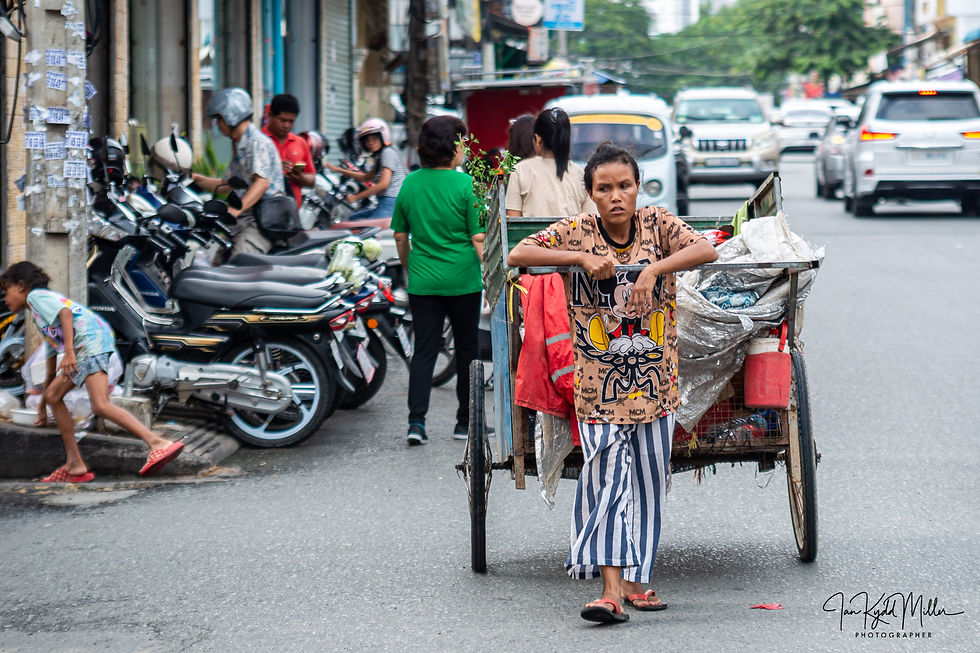
Closing thought: Relative poverty is best understood as a measure of inequality and social participation. It reminds us that poverty is not only about survival, but also about whether people can live with dignity and inclusion in their society.
Poverty in Cambodia has declined significantly over the past three decades, but it remains a pressing issue. As of 2022, about 16–18% of Cambodians lived below the national poverty line, with rural areas most affected. Despite rapid economic growth, challenges include inequality, vulnerable employment, and limited access to quality healthcare and education.

Cambodia has made remarkable progress in reducing poverty, driven by rapid economic growth and structural transformation. However, poverty remains a rural and inequality-driven challenge, with vulnerable employment and limited access to services keeping many households at risk. Sustained poverty reduction will depend on inclusive growth, stronger social protection, and resilience to external shocks.


Comments