
The Man Who Told Monroe It Was Allowed to Fight Back - Robert F. Williams
- Ian Miller

- May 14
- 3 min read
In the long American mythology of the civil rights movement, history tends to soften the edges. The nation remembers hymns, lunch counters, children in pressed Sunday clothes walking bravely into hostile crowds. It remembers dignity under assault because dignity is easy to canonise. What it remembers less comfortably are the rifles.

In the late 1950s, in Monroe, a Black Army veteran named Robert F. Williams looked around at the architecture of white supremacy and concluded that the federal government was either unable or unwilling to save Black citizens from it. So he reached for another American tradition, older than the republic itself: armed self-defense.
Monroe was not a large town. Around twelve thousand people lived there. Williams would later describe the place as deeply penetrated by the Ku Klux Klan — so deeply that many
Black residents no longer distinguished between the Klan and the local establishment. The police, he said, were compromised. The courts were compromised. Political leadership was compromised. Whether the numbers often repeated about Klan membership were literally exact mattered less than the atmosphere they described: a town where terror did not hide in shadows. It sat openly in positions of authority.

Williams had grown up close enough to slavery to feel its breath. His grandfather had been enslaved. That fact mattered to him deeply. Slavery was not ancient history in Monroe; it was living memory stretched across one generation.
He served in the military during the Second World War, returned home, and discovered that Black veterans could wear the uniform abroad and still be treated as prey at home. Cars carrying Black families were run off roads. Homes were shot into at night. Men disappeared into county jails after attempting to challenge segregation. Calls to authorities often disappeared into silence.
The local branch of the National Association for the Advancement of Colored People was tiny when Williams joined it — barely more than symbolic. Six members. He transformed it into a mass organisation of working-class Black Southerners: maids, labourers, factory workers, farmers, church women, veterans.
And unlike the more polished northern image of the civil rights struggle, Monroe’s movement did not revolve around respectability alone. It revolved around survival.
Williams and his organisers pushed directly into segregated public life. They fought to integrate Monroe’s public library. They challenged exclusion at public swimming pools. They organised boycotts and community defence networks. White resistance came swiftly and predictably.

Then came the rifles.
Williams helped organise armed patrols made up largely of Black veterans. Men familiar with military discipline sat guard over Black neighbourhoods after repeated Klan incursions. The firearms were legal. The intent, Williams insisted repeatedly, was defensive.
One night, according to accounts that would become legendary within Black liberation circles, armed Black residents confronted a Klan motorcade attempting to terrorise a Black neighbourhood. Gunfire came back toward the Klansmen.The raids diminished afterward.
That fact — uncomfortable, morally complicated, politically explosive — haunted later attempts to simplify the civil rights era into a purely nonviolent awakening of national conscience. In some Southern towns, violence receded not because racists discovered morality but because they encountered resistance.
Williams became controversial even within the broader movement. Leaders committed publicly to nonviolence worried he would damage support for desegregation efforts. Yet younger militants listened closely. Years later, figures associated with the Black Panther Party would see Williams as an intellectual ancestor.
His 1962 book, Negroes With Guns, landed like a thunderclap.
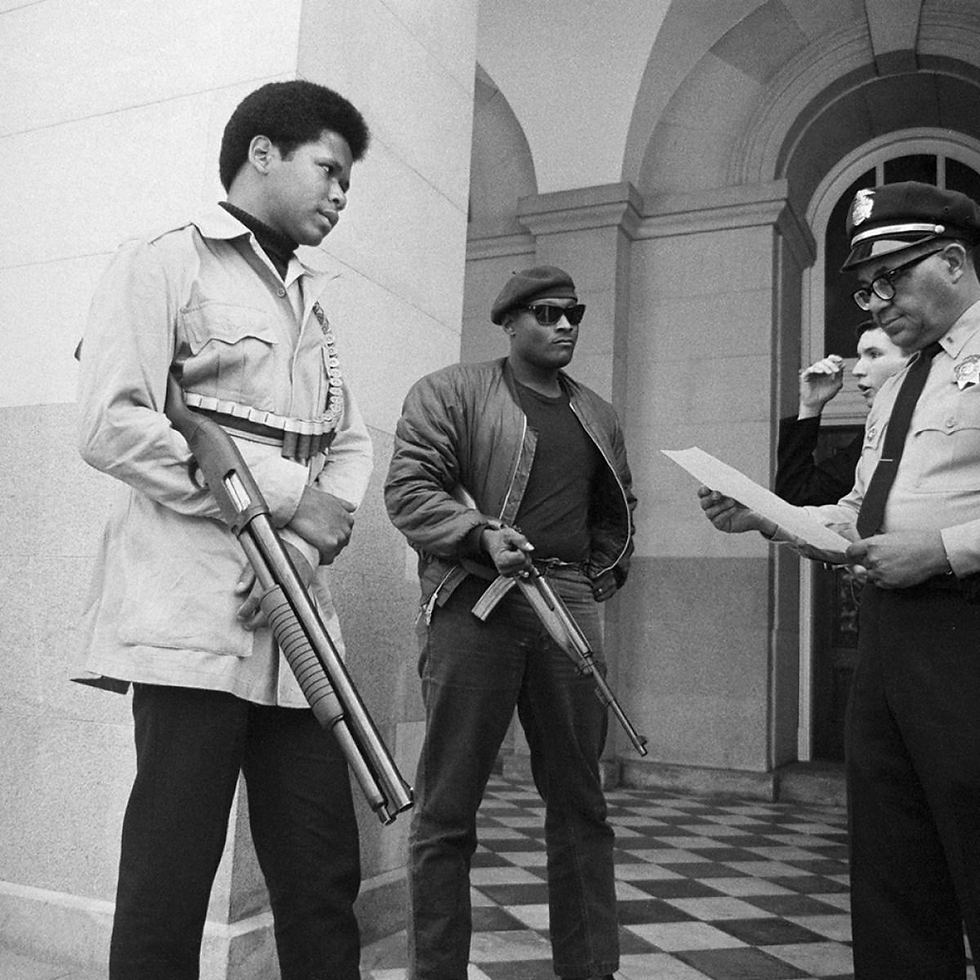
The title alone horrified white America and unsettled many liberals. But the argument underneath it was brutally straightforward. Nonviolence, Williams believed, was a tactic — not a religion. It could be extraordinarily powerful against an opponent constrained by public opinion, law, religion, or shame. But against unchecked racial terror backed by local government, he argued, passive suffering could become a death sentence. That distinction placed him on a collision course not only with segregationists but eventually with the state itself.
In 1961, after racial tensions exploded during the Freedom Rider era, Williams and his wife, Mabel Williams, fled the United States under threat of kidnapping charges that supporters argued were politically motivated. They would spend years in exile — first in Cuba, later in China — broadcasting messages about American racism back into the United States during the height of the Cold War.

Too much of white America, Williams became dangerous.
To many Black Americans, especially younger radicals, he became something else: proof that there had always been another tradition running parallel to the mainstream civil rights narrative — one less interested in appealing to the conscience of the nation than in surviving its brutality.
The story of Robert F. Williams remains difficult because it forces the country to confront a question it still has not fully answered.
Williams never claimed violence was noble. His argument was colder than that. Simpler too.
What is a citizen meant to do when the law itself becomes indistinguishable from the mob?


Comments