
The Pentagon deserves more than a performance of toughness

The Pentagon deserves more than a performance of toughness
Whether Pete Hegseth is qualified to run the United States Department of Defense should concern anyone who understands what the job involves. The secretary’s decisions can send people into combat, expose civilians to danger, unsettle alliances and commit public money on an extraordinary scale. Asking whether he possesses the necessary judgment is a basic act of democratic responsibility.
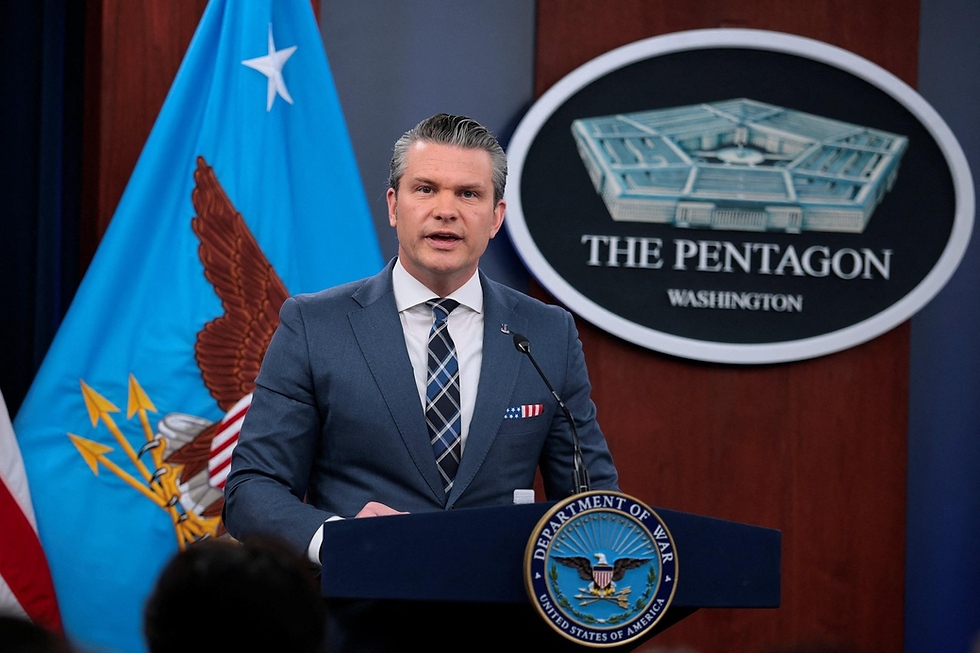
My view is that Hegseth has given the public substantial reasons to doubt it.
His military service deserves recognition. He served as an Army National Guard infantry officer, deployed to Iraq and Afghanistan, and received two Bronze Star Medals. Those are real credentials. Any serious assessment should acknowledge them without qualification or sneering.

But experience of military service establishes only part of the case for leading the Pentagon. The department requires someone capable of weighing competing intelligence assessments, managing an immense bureaucracy, overseeing procurement, maintaining alliances and telling a president when his preferred course could end in disaster. Courage and organisational judgment are different qualities. One does not automatically confer the other.
At his confirmation hearing, Hegseth acknowledged that the organisations he had previously run employed, at most, a couple of hundred people. He promised to surround himself with knowledgeable staff. That is sensible, as far as it goes. Yet advisers cannot supply the judgment their superior needs to assess their advice. Ultimately, someone must recognise the weak argument, challenge the reassuring assumption and accept responsibility for the decision.

His appointment was contentious even within his own party. Mitch McConnell, Susan Collins and Lisa Murkowski joined Democrats in opposing him. Vice-President JD Vance’s intervention broke a 50–50 Senate tie. Confirmation gave Hegseth the authority to serve; it left the underlying questions about his suitability unresolved.
The Signal affair then provided a disturbing practical test.
The Pentagon inspector general found that Hegseth used his personal phone and an unapproved commercial messaging application to transmit sensitive operational information before strikes in Yemen. The review concluded that his actions violated departmental policy and created an operational-security risk that could have endangered American pilots.

There is an important distinction here. The review acknowledged his authority over classification, and Hegseth maintained that he had shared no classified information. That qualification belongs in any honest account. It does little, however, to answer the central question of judgment: why circulate advance operational details through a channel the department had not approved for that purpose?
The public should expect the person responsible for protecting military personnel to exercise exceptional care with information that could expose them. The absence of a disastrous outcome offers limited reassurance about a decision that created unnecessary risk.
His supporters argue that the Pentagon needs an outsider prepared to confront bureaucracy, challenge complacency and restore military effectiveness. Those are legitimate ambitions. Large institutions can become wasteful, defensive and resistant to correction. Hegseth should be judged fairly on whether his reforms improve readiness.
He should also be required to demonstrate the connection between the changes he makes and the results he promises.
In September 2026, Reuters reported plans to cut general and flag-officer positions by 20 per cent. Reducing senior posts may have a defensible organisational rationale. The relevant questions are which responsibilities disappear, who takes over the remaining work and whether military advice becomes more effective or simply more agreeable to those at the top.
A healthy chain of command depends on people being able to report unwelcome facts. A secretary who wants honest advice must make it possible for professionals to say that a plan is unsound, a force is overstretched or an objective cannot be achieved at an acceptable cost. That requires confidence, patience and a willingness to hear disagreement.
It also requires independence from the president. Civilian control places the military under constitutional government. It imposes a duty on civilian leaders to understand the institution they direct and the limits within which it must operate. Loyalty to a president cannot discharge that responsibility.
There is no need to build this criticism around disputed allegations about Hegseth’s private conduct. His public record supplies enough material for scrutiny: limited experience managing large organisations, a documented failure of operational care and an approach to institutional reform whose benefits demand evidence.
The people who serve under him deserve more than assurances about toughness. They deserve a secretary who protects their lives through preparation, restraint and sound decisions.
Hegseth’s service earned him respect. The office he now holds requires him to earn the country’s confidence. On the evidence available, I do not believe he has.


Comments