
The U.S. Supreme Court has struck down Trump’s sweeping tariffs.
- Ian Miller

- 3 days ago
- 3 min read
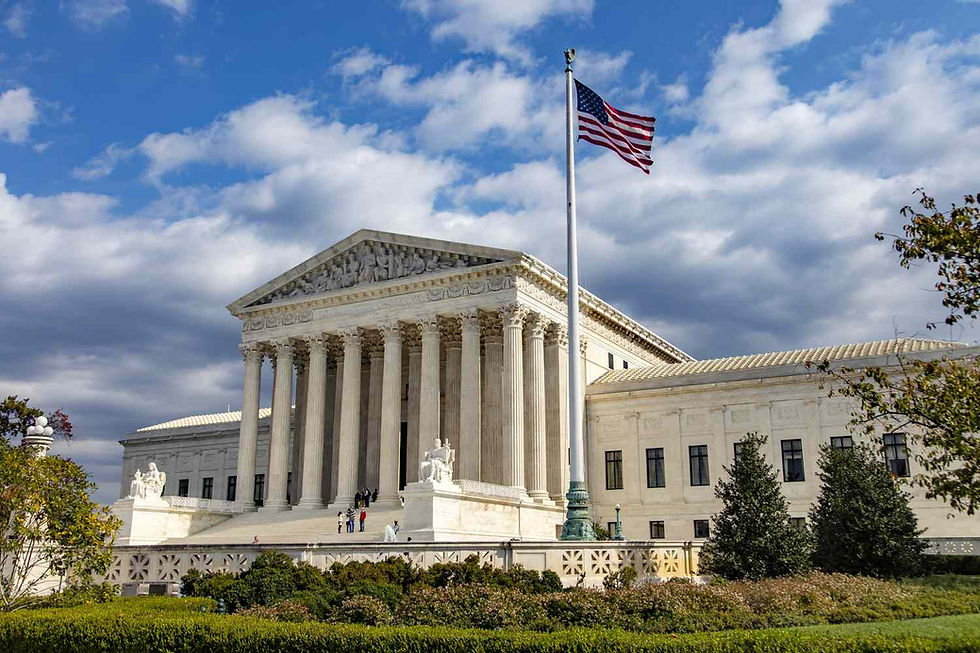
The marble columns of the Supreme Court of the United States cast long morning shadows as one of the most consequential rulings of the year dropped: a decisive rejection of President Donald Trump’s sweeping tariff regime. In a decision that instantly reshaped the economic and political landscape, the Court concluded that the president had overstepped his authority in imposing broad global tariffs under emergency powers.
At the heart of the case was the 1977 International Emergency Economic Powers Act, a statute originally designed to give presidents flexibility in responding to extraordinary foreign threats. Trump invoked it to justify wide-ranging tariffs on imported goods, arguing that unfair trade practices and economic vulnerabilities constituted a national emergency.

The administration framed the move as bold, necessary, and long overdue — a muscular defense of American industry in an era of fierce global competition.
But the justices were unconvinced that the law stretched that far.
In its majority opinion, the Court emphasized that while presidents hold substantial authority in foreign affairs, the Constitution explicitly grants Congress the power to regulate commerce with foreign nations. Emergency authority, the ruling stated, cannot be used as an open-ended substitute for legislative approval. The language was measured but firm: economic urgency does not nullify constitutional boundaries.
The reaction was immediate and electric ⚖️.
On Wall Street, markets flickered upward in early trading, reflecting investor relief that years of tariff uncertainty might finally stabilize. Importers and multinational manufacturers — long squeezed between rising costs and retaliatory measures from abroad — hailed the ruling as a restoration of predictability. “This brings clarity,” one trade executive said. “Businesses can plan again.”
Inside the White House, aides signaled defiance. Supporters of the president argued that the ruling hampers the executive branch’s ability to respond swiftly to foreign economic threats. They maintain that global trade dynamics move faster than Congress can legislate, and that flexibility is essential in protecting domestic industries from dumping, currency manipulation, and supply chain weaponization.

Yet critics counter that flexibility without guardrails risks transforming temporary emergency tools into permanent economic policy levers. Several lawmakers — including some within the president’s own party — suggested the ruling may force Congress to more clearly define the scope of trade authority going forward. Quiet conversations about bipartisan reform began almost immediately on Capitol Hill.
For American consumers, the practical effects could take time to unfold. Some tariffs may be rolled back, potentially easing pressure on prices for imported goods ranging from electronics to construction materials. However, trade policy is rarely static. New negotiations revised statutory frameworks, or alternative legal justifications could emerge as the administration recalibrates its strategy.
Beyond economics, the ruling carries a deeper institutional weight. It signals the Court’s willingness to draw firmer lines around executive power in an era when presidents increasingly rely on emergency statutes to achieve sweeping policy goals. Legal scholars note that the decision may reverberate far beyond tariffs, influencing how future administrations interpret emergency authority across a range of issues.
Politically, the moment is striking. The tariffs were not merely economic instruments; they were symbolic pillars of Trump’s governing philosophy — a promise to prioritize American production and challenge longstanding trade norms. The Court’s intervention reshapes that narrative, at least for now.

As Washington absorbs the shockwaves, one question dominates the conversation: In a volatile global economy, who ultimately decides how America engages the world — the president, or Congress?
The justices have drawn their answer in ink. The next move belongs to the political branches.


Comments