
Understanding the Roots of PTSD in Veterans: A Comprehensive Analysis of Contributing Factors
- Ian Miller

- Mar 14
- 6 min read
When soldiers return from war, they do not come back alone. The war follows them. It follows them in fragments of memory, in the sudden tightening of the chest when a car backfires, in the night when sleep breaks apart and the mind returns, again and again, to the same burning road or shattered building. For more than a century, medicine has tried to name this condition. The First World War called it “shell shock.” The Second World War spoke of “battle fatigue.” Today we call it Post-Traumatic Stress Disorder, or PTSD. But the label has always struggled to capture the complexity of what happens when human beings are pushed through experiences that overwhelm the mind’s capacity to absorb them.

Among military veterans, PTSD rarely has a single cause. Both American and British research now describe it as the result of overlapping pressures: traumatic exposure, repeated deployments, pre-existing vulnerabilities, moral injury, and the difficult process of returning to civilian life. Trauma is the spark, but the fire spreads through many pathways.
Combat exposure remains the most obvious and widely studied factor. War places individuals in situations where death is not theoretical but immediate and often intimate. A soldier may watch a friend killed beside them, fire on another human being, handle the remains of civilians or comrades, or spend weeks under the constant threat of mortar fire, roadside bombs, and ambush.
The U.S. Department of Veterans Affairs has repeatedly found that the severity and intensity of these experiences are among the strongest predictors of PTSD. It is not simply the fact of deployment that matters but what a person sees and endures while deployed.
British researchers reached similar conclusions, though with a slightly different emphasis.
The King’s Centre for Military Health Research, which has conducted some of the most influential long-term studies of UK military personnel, found that PTSD symptoms were closely linked to the nature of a soldier’s role in theatre—particularly front-line combat exposure and witnessing death or serious injury. Yet the British research also introduced another concept: the idea that trauma accumulates. In a landmark 14-year follow-up study of
UK personnel deployed to Iraq and Afghanistan, researchers found that psychological symptoms followed several trajectories. Some soldiers showed little distress initially but developed problems years later. Others recovered gradually over time. The implication was unsettling but clear: trauma does not behave like a wound that either heals or festers immediately. It can lie dormant and surface long after the war has ended.

Repeated exposure is one of the mechanisms through which that delayed suffering can emerge. Modern wars rarely involve a single tour of duty. American troops in Iraq and Afghanistan were often deployed multiple times, sometimes returning to the same conflict zones again and again. British forces faced similar operational patterns, particularly during the peak years of the Afghanistan campaign. With each deployment, soldiers returned to the same threat environment, reactivating the nervous system’s survival response. Psychologists describe this as chronic hyperarousal—the brain’s alarm system locked permanently in the “on” position. Over time, the ability to return to a normal baseline begins to erode.
Yet trauma alone does not determine who develops PTSD. Many veterans endure horrific experiences without developing chronic psychological injury, while others develop severe symptoms after events that might appear less dramatic on paper. Both American and British researchers have increasingly focused on vulnerability factors that exist before the battlefield.
Childhood adversity is one of the most powerful. Studies in both countries show that individuals who experienced abuse, neglect, family instability, or other forms of trauma earlier in life are more likely to develop PTSD after military trauma. The explanation is partly neurological and partly psychological. Early trauma can alter the brain’s stress-response systems, making them more reactive to later threats. It can also shape how individuals interpret and cope with overwhelming experiences. In this sense, the war sometimes reopens wounds that began long before enlistment.
Another layer of explanation lies in what psychologists call “peritraumatic response”—how a person’s mind reacts in the moment of trauma. Some individuals experience dissociation, a mental state in which perception becomes blurred or detached, as though the event is happening to someone else. Dissociation can protect the mind during extreme danger, but it also interferes with how memories are processed afterward. Those fragmented memories may later return as flashbacks, nightmares, or intrusive recollections that feel as vivid as the original event.
For many veterans, however, the deepest wounds are not rooted in fear alone. In recent years, both American and British researchers have focused increasingly on a concept known as moral injury. Moral injury occurs when individuals participate in, witness, or fail to prevent actions that violate their deepest moral beliefs. The injury is not primarily terror but guilt, shame, or betrayal.
A soldier might survive a firefight without lasting psychological damage yet remain haunted by a civilian casualty, a mistaken engagement, or an order that conflicted with personal ethics. British charities such as Combat Stress have emphasized that moral injury is a major component of the distress seen in treatment-seeking veterans. King’s College London studies have linked moral injury in UK personnel to worse mental health outcomes, particularly when combined with earlier trauma.
The institutional dimension of moral injury can be equally powerful. Veterans sometimes describe feeling betrayed by leaders, by governments, or by the military institutions they served. When individuals believe they were placed in morally compromised situations or later abandoned by the systems meant to support them, the psychological damage can deepen.
Another factor that complicates the picture is traumatic brain injury. Modern warfare, particularly in Iraq and Afghanistan, exposed troops to repeated blast waves from improvised explosive devices. Even mild brain injuries can disrupt sleep, memory, emotional regulation, and concentration—symptoms that overlap with PTSD. Researchers in both the United States and the United Kingdom have found that veterans who experienced blast-related injuries are more likely to report severe post-traumatic stress symptoms. The brain and the psyche, in this context, are injured together.
But if trauma is the spark, the period after returning home is often the fuel. The transition from military to civilian life can be abrupt and disorienting. In uniform, life is structured, purposeful, and intensely communal. Outside it, veterans may encounter unemployment, social isolation, marital strain, or a society that struggles to understand what they experienced.

British policymakers have increasingly highlighted this transition as a critical point of vulnerability. Parliamentary evidence and NHS reports have noted that many veterans delay seeking help for years, often because of stigma or uncertainty about where to turn. Surveys conducted during the development of the NHS veterans’ mental health programme—now known as Op COURAGE—revealed that many former service members felt civilian healthcare providers lacked sufficient understanding of military experience. That perception alone can discourage people from seeking treatment.
American systems face similar challenges, though on a larger scale. The U.S. Department of Veterans Affairs operates one of the world’s most extensive veterans’ healthcare systems, yet even there, barriers such as stigma, geographic distance from services, and the complexity of navigating bureaucracy can delay treatment.
Both countries have learned another lesson over time: PTSD rarely appears in isolation. Depression, anxiety, substance misuse, and sleep disorders frequently accompany it. British data submitted to Parliament suggested that depression may actually be more commonly reported among UK veterans than PTSD itself. Alcohol misuse, long intertwined with military culture, can become both a coping mechanism and a worsening factor.
In many ways, the science of PTSD has evolved from a narrow medical diagnosis to a broader understanding of trauma’s ripple effects. The disorder is now widely seen as a biopsychosocial condition—shaped by biology, personal history, moral conflict, and social environment.
Yet one myth continues to shadow the conversation: the idea that PTSD reflects weakness. Both American and British clinicians reject this interpretation. Trauma, not character, is the causal agent. The human brain evolved to respond to danger with intense survival reactions. War places individuals in situations where those reactions are repeatedly activated, often beyond what the mind can integrate. When the threat is over, the body sometimes fails to stand down.
That lingering alarm system is what many veterans carry home. The war is over, but the brain remains on patrol.


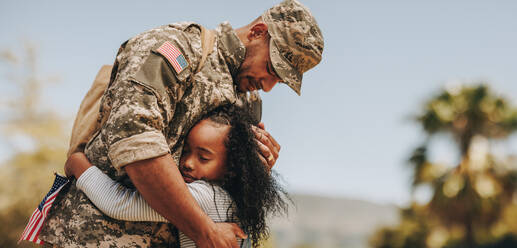


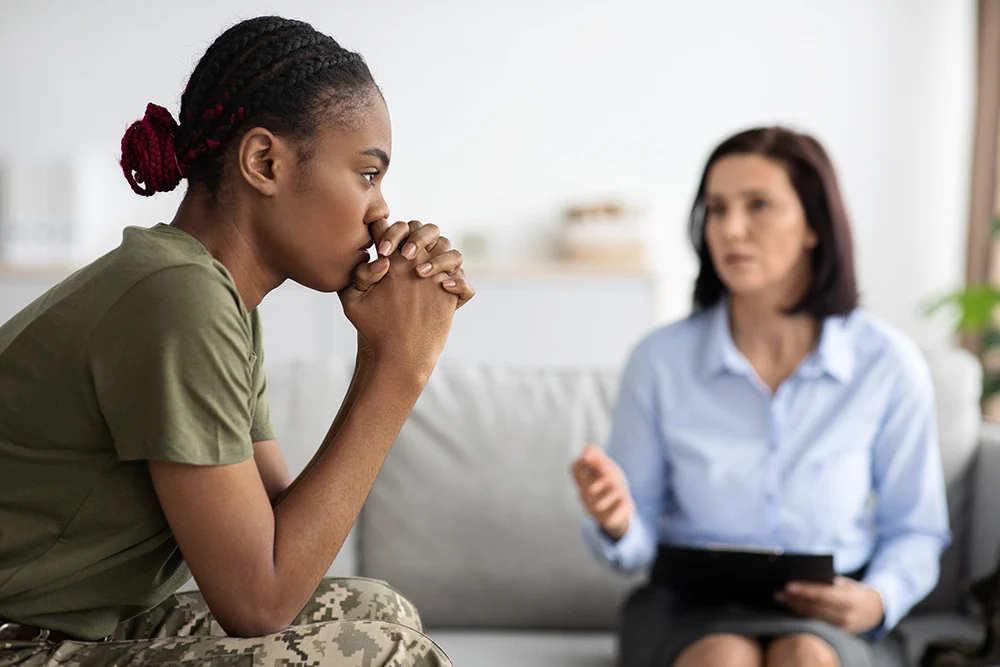

The United States and the United Kingdom, despite differences in scale and healthcare systems, have reached broadly similar conclusions. PTSD among veterans is rarely caused by a single moment of terror. It emerges from layers of experience: battlefield trauma, repeated deployments, earlier life adversity, moral conflict, brain injury, and the often-difficult passage back into civilian life.
Understanding those layers has changed how both countries approach treatment. Instead of focusing solely on symptoms like flashbacks or nightmares, modern veteran care increasingly addresses identity, moral injury, social reintegration, and long-term support.
In the end, PTSD is less about what happened during the war than about how that experience continues to live within the person who survived it. War ends on the battlefield. For many veterans, the deeper struggle begins only after they come home.


Comments